Bench Grinder vs Pedestal Grinder: Which to Buy? (November 2026)
Choose a bench grinder for most home and garage shops, and a pedestal grinder when you need a fixed, floor-standing station. The bench grinder vs pedestal grinder decision comes down to mounting, wheel speed and how much room you have to spare.
On this page (9 sections)
- Bench grinder vs pedestal grinder: what actually differs?
- The two grinders side by side
- Which speed suits your sharpening?
- Wheel size and grit: does 8 inches matter?
- Tool rests and control: which is easier to use?
- Mounting and footprint: bench, stand or floor?
- Safety and dust control on either machine
- Who should buy which grinder?
- The verdict: bench grinder vs pedestal grinder
Choose a bench grinder for most home and garage shops, and a pedestal grinder when you want a fixed floor-standing station. For the bench grinder vs pedestal grinder question, mounting and speed decide more than the label on the box.
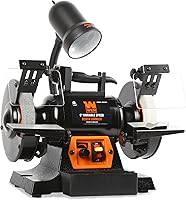
The DeWalt DW758 is our pick for most readers. It has a 3/4 HP motor turning 8-inch wheels at 3,600 rpm, which makes short work of reshaping tools and cleaning up metal.
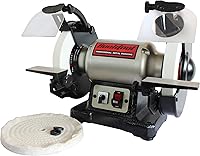
The Rikon 80-805 is the better choice when you sharpen chisels, plane irons or drill bits and want to keep the edge cool.


Bench grinder vs pedestal grinder: what actually differs?
The real difference is how the grinder is mounted, not the wheels it spins. A bench grinder is a compact unit you bolt to a bench or a stand, and a pedestal grinder is a floor-standing machine with its own base or column.
Both spin abrasive wheels and both can sharpen, deburr and shape metal. The type name tells you where the machine lives and how much room it takes.
A bench grinder usually has a cast base with mounting holes. You fix it to a workbench, a dedicated stand or a wall bracket at a height that suits you.
A pedestal grinder stands on the floor on a built-in base or column. The wheels sit at a fixed working height, and you walk up to it rather than leaning over a bench.
That difference shapes the rest of the choice. A pedestal gives you clearance all around the wheels and a permanent spot on the floor.
A bench grinder keeps your floor clear and puts the wheels at bench height.
Speed and motor size vary from model to model, so don't assume every pedestal grinder is more powerful. Check the horsepower, rpm and wheel size on the exact machine.
The two grinders side by side
The DeWalt is the faster, more powerful all-rounder; the Rikon is the slower, cooler-running sharpening machine. Both run 8-inch wheels, so the choice comes down to speed, motor and the extras on the rests.
| Feature | DeWalt DW758 | Rikon 80-805 |
|---|---|---|
| Motor | 3/4 HP induction | 1/2 HP |
| Wheel speed | 3,600 rpm | 1,750 rpm |
| Wheel size | 8 in | 8 in |
| Wheels included | 36 and 60 grit | 60 and 120 grit |
| Tool rests | Precision-machined aluminum | Dual adjustable, left rest grooved for drill bits |
| Base | Cast iron base and housing | Cast iron base with anti-vibration rubber feet |
| Between wheels | 12-1/2 in |
| Product | Best for | Motor | Speed | Wheel size | Our score |
|---|---|---|---|---|---|
| DeWalt DW758 8-Inch Bench Grinder | all-round shop use | 3/4 HP | 3,600 rpm | 8 in | 9.1 |
| Rikon 80-805 8-Inch Low Speed Grinder | sharpening edge tools | 1/2 HP | 1,750 rpm | 8 in | 8.8 |
The DeWalt's 12-1/2 inches between wheels gives you room for longer work and awkward shapes. That extra span matters when you grind a long bar or a wide blade.
The Rikon's two grits split the job: a 60-grit wheel for rough shaping and a 120-grit wheel for a finer edge. Its left rest has a groove that holds a drill bit at the right angle for sharpening.
Both machines are heavy enough to need a solid base. Plan your mounting before the grinder arrives, whether that's a bench or a stand.
Which speed suits your sharpening?
Pick the 1,750 rpm Rikon for edge tools and the 3,600 rpm DeWalt for rough metal removal. Speed is the single biggest factor in how a grinder behaves at the wheel.
The DeWalt runs its 8-inch wheels at 3,600 rpm. That high speed takes metal off quickly, which is what you want when you reshape a damaged edge, clean up a weld or knock down a burr.
The Rikon runs at 1,750 rpm, about half the speed. Slow wheels give you more time to watch the edge and less chance of burning a thin tool.
Heat is the enemy of a good edge. A high-speed wheel can blue a chisel or drill bit in a second or two if you hold it too long against the grit.
The slow Rikon gives you a wider margin for error.
The trade-off is time. The Rikon's 1/2 HP motor removes metal more slowly, so heavy reshaping takes longer.
If your work is mostly sharpening rather than shaping, that slower pace is a benefit, not a problem.
For readers focused on edges, the best bench grinder for sharpening comparison goes deeper into speed and wheel choice. If drill bits are your main job, the guide on how to sharpen drill bits on a bench grinder walks through the angles.
High speed vs low speed in practice
Use a high-speed grinder when you need to move material fast and the tool can take the heat. Lawn mower blades, garden tools and heavy shop metal fit that pattern.
Use a low-speed grinder when the edge is thin and the steel is hard. Chisels, plane irons, lathe tools and drill bits all reward a slower wheel and a light touch.
You can't slow a 3,600 rpm grinder to 1,750 rpm just by pressing lighter. The wheel speed is set by the motor, so choose the speed at the start rather than fighting it later.
Wheel size and grit: does 8 inches matter?
Both grinders run 8-inch wheels, which give a longer grinding arc and more room to work than a 6-inch model. The bigger wheel also lasts longer before it wears down to a smaller diameter.
An 8-inch wheel puts more abrasive surface under the tool at any moment. That longer arc helps when you grind a flat bevel, since the wheel curve is gentler across the edge.
The DeWalt ships with 36-grit and 60-grit wheels. The coarse 36-grit wheel is for heavy stock removal and the 60-grit wheel for general grinding.
The Rikon ships with 60-grit and 120-grit wheels. The 120-grit wheel leaves a cleaner surface, which suits a final pass on a sharpened edge.
Grit choice matters as much as speed. A coarse wheel on a slow grinder still removes metal briskly, while a fine wheel on a fast grinder can still burn an edge if you press hard.
If you sharpen lathe tools, the best bench grinders for sharpening lathe tools covers wheels and rests set up for that work. The right wheel grit makes the biggest difference on turning tools.
Tool rests and control: which is easier to use?
The DeWalt's machined rests are solid and precise; the Rikon's adjustable rests include a groove made for drill bits. Rest quality decides how steady your angle stays.
The DeWalt has precision-machined aluminum tool rests. They give you a flat, stable platform to set the tool against, so your bevel angle stays consistent as you work.
The Rikon has dual adjustable tool rests that you can set to useful angles. The left rest adds a groove for sharpening drill bits, which helps you hold the bit at the right position without a separate jig.
Adjustable rests win when you grind several tools at different angles. Fixed rests suit one repeated job where the angle never changes.
Check that the rest sits close to the wheel, since a wide gap lets the tool dip and catch. A small gap also reduces the chance of a workpiece wedging between wheel and rest.
Good rests don't replace a light touch. Even on a stable rest, you control the pressure and the time the tool spends against the wheel.
Mounting and footprint: bench, stand or floor?
The bench grinder fits a bench or bolt-on stand and keeps your floor clear; a pedestal grinder needs floor space but stays permanently set up. Measure your space before you choose.
The DeWalt measures 17.75 x 12.63 x 11.73 inches. The bench or stand it sits on needs to carry it without flexing.
The Rikon measures 16.38 x 10.75 x 11.25 inches and weighs 37 pounds. Its cast iron base has anti-vibration rubber feet and mounting holes for bench or stand installation.
Both grinders are heavy enough to walk or vibrate if the mounting isn't solid. Bolt the base down when you can, and choose a stand rated for the weight.
A pedestal grinder's advantage is clearance. With no bench in the way, you can approach the wheels from either side and work longer pieces without hitting a wall or a bench edge.
The trade-off is floor space and commitment. A pedestal grinder is hard to move once set up, and it takes a permanent spot in the shop.
A bench grinder on a bolt-on stand gives you most of that clearance and lets you tuck it away when the job is done. For a small shop, that flexibility counts for a lot.
For a wider view of what these machines do, the guide on what is a bench grinder used for covers the common shop jobs.
Safety and dust control on either machine
Whichever grinder you choose, fit the guards and eye shields and keep the rest close to the wheel. The machine type doesn't change the basic safety rules.
Both grinders ship with adjustable eye shields and spark deflectors or arrestors. Set them between your face and the wheel before you start.
The DeWalt has rear exhaust ports in the wheel guards, which direct sparks and dust away from the operator. That helps keep the work area cleaner during heavy grinding.
The Rikon includes a diamond wheel dresser for truing the wheels. A dressed wheel runs smoother and cuts cooler, which matters most on a slow-speed sharpening setup.
Wear safety glasses under the shield and keep loose clothing away from the spinning wheels. Stand to one side when you start the grinder, since a damaged wheel can throw debris.
Check the wheel for cracks before each use and never grind on the side of a wheel. Follow the wheel maker's speed rating, which matters most on the fast 3,600 rpm DeWalt.
Who should buy which grinder?
Buy the DeWalt DW758 if you grind a mix of tools and metal and want speed and power. Buy the Rikon 80-805 if sharpening edges is your main job and you want to control heat.
The DeWalt suits a general home or garage shop. Its 3/4 HP motor and 3,600 rpm wheels handle reshaping, deburring and heavy cleanup, and the 12-1/2 inches between wheels gives you room for longer work.
The machined rests help keep your angle steady through the job.
The Rikon suits woodworkers and machinists who sharpen chisels, plane irons, drill bits and lathe tools. The 1,750 rpm speed keeps heat down, and the 60 and 120-grit wheels let you shape and finish on one machine.
The grooved left rest is a practical help for drill bits.
Skip the DeWalt if you mostly sharpen thin edges and want the least risk of burning them. Skip the Rikon if you do a lot of heavy reshaping and want the metal to come off fast.
If you have floor space and want a permanent station, mount either grinder on a pedestal stand. That gives you the clearance of a pedestal with the compact machine you already chose.
The verdict: bench grinder vs pedestal grinder
The DeWalt DW758 wins overall for most readers, and the Rikon 80-805 is the better buy when edge tools are the main job. In this bench grinder vs pedestal grinder matchup, the higher-scoring DeWalt covers more ground for a home shop.
Pick the DeWalt if you need power and speed for mixed grinding. Its 3/4 HP motor, 3,600 rpm wheels and wide span between wheels handle big and small work alike.
Pick the Rikon if you sharpen chisels, drill bits and lathe tools. The slow 1,750 rpm speed and two-grit wheels help you keep a cool, clean edge.
Mount either one on a bench or a stand to match your space. A floor-standing pedestal setup only makes sense when you have the room and want the grinder to stay put.
Frequently asked questions
Is a pedestal grinder better than a bench grinder?
Neither is better in every shop. A pedestal grinder gives you a fixed floor station and more clearance around the wheels, while a bench grinder saves floor space and sits at a comfortable working height on an existing bench.
Pick the grinder speed and wheel size you need, then choose the mounting.
Can you put a bench grinder on a pedestal stand?
Yes. Many 8-inch bench grinders have mounting holes in the base so you can bolt them to a stand, and the Rikon 80-805's base has holes for bench or stand installation.
Check that the stand's top matches the base footprint and that the stand is stable before you mount the grinder.
What speed should a bench grinder run for sharpening?
A low-speed grinder at about 1,750 rpm gives you more control and less heat on chisels, plane irons and drill bits. High-speed grinders at 3,600 rpm remove metal faster and suit rough shaping and heavy burs, but they can overheat a thin edge in seconds if you press too hard.
Do I need a pedestal grinder for a small shop?
No. A bench grinder mounted on a sturdy bench or a bolt-on stand covers the same grinding jobs in a small shop.
A full pedestal grinder only makes sense when you have floor space to spare and want the grinder permanently set up away from your workbench.
What is the difference between a bench grinder and a pedestal grinder?
The main difference is mounting. A bench grinder is a compact unit that clamps or bolts to a bench or stand, while a pedestal grinder is built as a floor-standing machine with its own base or column.
Wheel size and motor power vary by model rather than by type.