How to Sharpen Drill Bits on a Bench Grinder
To learn how to sharpen drill bits on a bench grinder, make short, light passes on each cutting lip and keep both lips similar in length and angle. Let the bit cool between passes and wear eye protection.
On this page (10 sections)
- What do you need to sharpen a drill bit on a bench grinder?
- How do you set up the grinder safely?
- How do you sharpen drill bits on a bench grinder step by step?
- How do you keep both cutting edges even?
- How do you avoid overheating a drill bit?
- How can you tell whether a drill bit is sharp?
- What mistakes should you avoid when sharpening?
- Which bench grinder suits drill-bit sharpening?
- Which grinder should you choose for sharpening drill bits?
- What should you remember when sharpening drill bits?
To sharpen drill bits on a bench grinder, make short, light passes on each cutting lip and keep both lips similar in length and angle. Let the bit cool between passes and wear eye protection.
A bench grinder can sharpen many standard twist bits, but good results depend on steady handling and frequent checks. Use the original point as your guide, remove only enough metal to form clean edges, and stop when the bit is difficult to control.
What do you need to sharpen a drill bit on a bench grinder?
You need a bench grinder with a sound wheel and an adjustable tool rest, eye protection, and a way to cool the bit. A drill-bit gauge or a sharp bit of the same type can help you compare point shape and lip length.
Before starting, check that the wheel is secure and free of cracks. Set the tool rest close to the wheel according to the grinder maker's instructions, and stand to one side while the wheel starts.
Wear safety glasses or a face shield, tie back long hair, and keep loose sleeves and jewelry away from rotating parts. Clear the bench so you can set down a hot bit without reaching across the wheel.
A slower grinder gives you more time to control each touch and can reduce heat buildup. The Rikon 80-805 8-Inch Low Speed Grinder runs at 1,750 RPM and has a groove in its left tool rest for sharpening drill bits.
For a broader look at grinder tasks, see what a bench grinder is used for. To compare machines built for tool care, read best bench grinders for sharpening.
How do you set up the grinder safely?
Set the tool rest close to the wheel and hold the bit firmly with your fingers clear of the grinding surface. If a bit is too small to control, use a suitable holder or choose another sharpening method.
Make sure the wheel is rated for the grinder and suited to the work. Let it reach full speed before bringing the bit close.
Place a cup of water within easy reach, away from the grinder's electrical parts. Keep the area around the machine clear, and do not lean over the wheel while sharpening.
How do you sharpen drill bits on a bench grinder step by step?
Sharpen one cutting lip at a time with brief, light touches, rotating the bit to follow the existing point and flute. Cool and inspect the bit after each pass, then repeat on the opposite lip.
- Hold the bit by its shank, with the cutting end angled toward the wheel.
- Touch one cutting lip lightly to the wheel.
- Rotate the bit slightly during contact to follow the lip and flute.
- Pull the bit away, cool it, and inspect the point.
- Repeat on the opposite lip with a similar motion.
- Compare both sides and correct only the edge that needs it.
Many general-purpose twist bits use a point angle near 118 degrees, but the right angle can vary by bit type and material. Keep the original point as your guide when it is still visible.
Keep the bit moving during contact. Grinding in one spot can flatten the lip or overheat the tip.
How do you keep both cutting edges even?
Keep both lips similar in length, angle, and height at the point. Uneven edges can cause the bit to wander or cut an oversized hole.
After each pass, look directly at the point and turn the bit to check it from both sides. If one lip is longer or higher, remove a small amount from that side, then compare again.
Frequent checks help you preserve the bit and catch an uneven edge before too much metal is gone. A drill-bit gauge can help compare the angle and lip length; without one, use a sharp bit of the same type and size as a visual reference.
How do you avoid overheating a drill bit?
Use short grinding contacts and cool the bit often. If the tip changes color, stop grinding and let it cool before deciding whether to continue.
Dip the bit in water between passes while holding it by the shank. Don't touch the freshly ground end to check its temperature.
A fast grinder removes metal quickly, so use an especially light touch. The DeWalt DW758 runs at 3,600 RPM and has precision-machined aluminum tool rests for positioning work.
The benchtop woodworking tools guide covers machines that may suit a home shop. For a sharpening-focused machine comparison, see best bench grinders for sharpening.
How can you tell whether a drill bit is sharp?
A sharpened bit has two clean lips that meet evenly at the center, without rounded or chipped edges. Check the shape before putting it in a drill.
For a practical check, secure a scrap board and drill at a controlled speed. A bit that cuts without wandering is more useful than one that looks symmetrical but still rubs instead of cutting.
Never check sharpness by touching the edge. If the bit wanders or makes a poor hole, stop and inspect the point rather than pressing harder.
What mistakes should you avoid when sharpening?
Avoid long passes, uneven pressure, and trying to reshape a badly damaged bit all at once. These mistakes can remove too much metal, overheat the tip, or leave one cutting lip higher than the other.
Don't grind a bit you cannot hold securely. For small bits, a purpose-made holder may improve control; if you still can't guide the bit safely, use a method suited to its size.
Don't use a bench grinder on specialty bits unless you know the required edge shape. Masonry, spade, and step bits differ from standard twist bits and may need a different sharpening method.
Which bench grinder suits drill-bit sharpening?
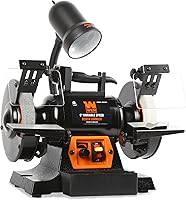
Choose a grinder with a speed and tool rest that fit your control needs. The Rikon suits someone who wants a low-speed grinder with a drill-bit groove, while the WEN BG4286 offers a lower-speed option with pivoting tool rests.
The WEN BG4286 includes 60- and 120-grit wheels, pivoting rests, and adjustable eye guards. Choose it for a slow-speed setup with those included features; skip it if you specifically want a drill-bit groove, which the Rikon has.
The DeWalt DW758 fits a buyer who wants a higher-speed grinder with more space between the wheels and precision-machined rests. Its 3,600 RPM speed removes material quickly, so it is a less forgiving choice if you are learning to control light passes.
Which grinder should you choose for sharpening drill bits?
Choose the Rikon 80-805 if a dedicated drill-bit groove and 1,750 RPM speed match your sharpening routine. Choose the WEN BG4286 if you want a slow-speed grinder with pivoting rests and included 60- and 120-grit wheels.
Choose the DeWalt DW758 if you value higher-speed material removal and precisely machined rests, and can keep each contact brief. If you sharpen only occasionally or struggle to hold small bits securely, use a purpose-made holder or a sharpening method designed for drill bits.
What should you remember when sharpening drill bits?
For how to sharpen drill bits on a bench grinder, use brief passes, cool the bit, and match the two cutting lips. Pick a slow-speed grinder for more time to guide each touch, or the DeWalt if faster material removal and precise rests suit your work.
Stop if the wheel, bit, or holder is damaged, or if you cannot control the point shape. Once the edges look even, test the bit in secured scrap and adjust only if it cuts poorly.
Frequently asked questions
Can you sharpen drill bits on a bench grinder?
Yes, a bench grinder can sharpen many standard twist drill bits if you use light, controlled passes and keep both cutting lips even. Check the bit often and let it cool.
Stop if the cutting edges or point look uneven.
Specialty bits may need a dedicated sharpening method.
What angle should a drill bit have?
Many general-purpose twist bits use a point angle near 118 degrees, but the right point depends on the bit and material. If the original point is intact, use it as your visual guide.
Remove as little metal as possible, and follow the bit maker's instructions for specialty designs.
How do you keep a drill bit cool while grinding?
Use brief touches, then dip the bit in water to cool it before continuing. Don't hold the bit against the wheel long enough to discolor it, and avoid grinding a hot bit further.
Keep water away from electrical parts and the grinder's motor.
How can you tell if a drill bit is sharpened evenly?
Compare the two cutting lips for similar length, angle, and height at the tip. When they meet evenly at the center, the bit is more likely to cut straight.
A scrap piece can reveal wandering or a slow cut, but don't test a bit with your hands near the cutting edge.