Benchtop Woodworking Tools: Machines a Home Shop Needs
A home shop’s core benchtop woodworking tools depend on the jobs you do most: a drill press for repeatable holes, a saw for curves, and a planer for consistent board thickness. Add a grinder for sharpening, then plan for dust collection, work support and safe storage.
On this page (10 sections)
- Which benchtop woodworking tools should a home shop have?
- How do you choose between a drill press and a handheld drill?
- When is a band saw more useful than a scroll saw?
- What does a benchtop planer do?
- Do you need a jointer as well as a planer?
- Which machine should you buy first?
- How should you plan for dust and workspace?
- What safety habits matter around benchtop machines?
- How can you build a small shop one tool at a time?
- Which benchtop woodworking tools fit your projects?
A home shop’s core benchtop woodworking tools depend on the jobs you do most: a drill press for repeatable holes, a saw for curves, and a planer for consistent board thickness. Add a grinder for sharpening, then plan for dust collection, work support and safe storage.
You do not need every machine at once. Start with the work you expect to make, then choose tools that fit your bench, power access and room to handle stock.
This guide compares the main benchtop machines by the job they solve. For shop layout and dust planning, see our small shop basics category.
Which benchtop woodworking tools should a home shop have?
Choose machines around your most common tasks, not a checklist. A drill press, curve-cutting saw, planer and grinder each solve a different problem, so buy the one that removes the biggest bottleneck first.
| Tool | Main job | A good fit when |
|---|---|---|
| Drill press | Drill repeatable holes at controlled angles and depths | You make jigs, furniture or parts with aligned holes |
| Band saw | Cut curves and rough shapes within its capacity | You work with stock that fits the saw |
| Scroll saw | Cut tight curves and interior shapes | You make small parts, patterns or decorative work |
| Thickness planer | Bring boards to a more consistent thickness | You often dimension rough or uneven lumber |
| Bench grinder | Grind or sharpen suitable tools and shop items | Your work includes tool maintenance |
| Dust collector | Capture chips and dust at machines | You use tools that produce dust and need a collection plan |
A compact shop can begin with one or two machines and add others as projects demand. Leave room for clamping, assembly and hand tools instead of filling every bench with equipment.
Machines also need support beyond their footprints. A long board can extend several feet from a planer or saw, so make sure you can guide stock without hitting a wall, door or stored material.
How do you choose between a drill press and a handheld drill?
A drill press is useful when hole placement, angle or repeatability matters. A handheld drill is easier to carry to large workpieces and takes less dedicated bench space.
The press holds the bit in a fixed orientation while the work moves beneath it. That setup can help with repeated holes and controlled depth, but the machine's throat and table size limit the work you can reach.
Think about the largest piece you expect to drill. A tabletop machine may suit small furniture parts, while broad panels can be awkward if they do not fit between the column and bit.
Secure the workpiece before drilling, especially if it could spin or lift. Use eye protection and follow the machine's instructions for speed and bit choice.
Read what size drill press you need for home projects to compare capacity with the pieces you plan to make. If you are choosing between a compact and floor model, see benchtop or floor drill press.
When is a band saw more useful than a scroll saw?
A band saw suits curves in stock that fits its cutting capacity, while a scroll saw suits intricate shapes and interior cuts. The right choice depends on the size of your work and the detail you need.
Band saw blades form a continuous loop, so the cut is less suited to enclosed cutouts that require threading a blade through a small opening. The work table and blade width also affect how tightly a curve can turn.
A scroll saw uses a short blade held at both ends, which can be removed to start an interior cut. Its smaller work area and capacity make it a more natural fit for ornaments, patterns and other detailed pieces.
These tools overlap on some curved cuts, but they are not interchangeable for every job. Compare the workpiece size, curve radius and whether you need interior openings before choosing.
The band saw basics guide explains setup and safe handling. For a closer comparison of cut types, see scroll saw or jigsaw.
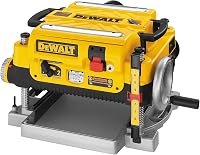
What does a benchtop planer do?
A thickness planer makes one face of a board more parallel to the opposite face, helping bring stock to a more consistent thickness. It does not flatten a twisted board by itself.
For a planer to work well, the board needs a stable reference face. If the board rocks or bows on the bed, it may come out thinner in some places while keeping the same warp.
A sled can help hold an uneven board steady through the planer. The sled supports the stock until one face is flat enough to reference for later passes.
Planers also need infeed and outfeed support for long boards. Keep hands away from the cutter area and follow the machine's instructions for stock limits and feed direction.
Our guide to what a thickness planer does in a home shop explains the process. For the sled approach, see how a planer sled flattens boards without a jointer.
Do you need a jointer as well as a planer?
A jointer and planer handle different steps in milling lumber. The jointer makes a flat face or straight edge, and the planer brings the opposite face into a more consistent thickness.
A planer cannot reliably correct a board that is cupped, twisted or bowed unless the stock is held flat as it passes through. A jointer can create a reference face, but the planer is often used afterward to make the other face parallel.
You can use a sled to support uneven stock in a planer if you do not own a jointer. That approach takes setup and stable support, so it may be slower than using a jointer for frequent milling.
Choose based on how often you prepare rough lumber and how much room you can give the machines. If most of your stock arrives surfaced and straight, you may not need both tools immediately.
See do you need a jointer if you already own a planer? for the trade-offs.
Which machine should you buy first?
Buy the machine that solves a repeated problem in your current projects. A tool that gets used every week is usually a better first choice than a versatile machine you have no clear task for.
Use your project list to rank the jobs below:
- Repeatable holes: consider a drill press if parts need aligned holes or controlled drilling.
- Curved shapes: consider a band saw for stock within its capacity, or a scroll saw for smaller detail work.
- Consistent board thickness: consider a planer if you regularly prepare uneven or rough lumber.
- Tool maintenance: consider a bench grinder for suitable sharpening and grinding tasks.
- Dust at several machines: plan collection as you add tools, rather than treating it as an afterthought.
For each candidate, write down the largest workpiece, the amount of bench space it needs and where material will go before and after the cut. This quickly reveals whether a machine fits the room as well as the project.
A machine's purchase is only part of its space cost. Include stands, fences, accessories, clamps and the clear area needed to operate it.
How should you plan for dust and workspace?
Plan dust collection and stock movement before setting machines in place. A compact tool can still need room for a hose, long boards and safe access around the work area.
Measure each machine's footprint and operating area. Include space to change blades or knives, move the table or fence, and retrieve work without reaching across a running cutter.
Dust ports vary by tool, so check the port size and hose path before settling on a collector. Avoid routing hoses where they can catch your feet or interfere with the workpiece.
Collection does not replace safe cleanup. Follow the tool and collector instructions, keep vents clear, and use suitable respiratory protection when the work and materials call for it.
For a practical sizing approach, read how to size a dust collector for a small shop. The best woodworking dust collectors for home shops roundup can help compare collection options.
What safety habits matter around benchtop machines?
Safe machine use starts with stable setup, secured work and clear attention to the cutting area. Read each machine's manual before use and follow its guard and protective equipment instructions.
Keep loose clothing, jewelry and long hair away from moving parts. Unplug a machine before changing a blade, adjusting a cutter or clearing a jam, following the maker's instructions.
Support long stock so it does not tip or bind. Clamps can help hold smaller work, but place them so they do not interfere with the blade, bit or cutter.
Do not force stock through a machine or reach across moving parts to retrieve offcuts. Wait for the tool to stop before adjusting the work or clearing debris.
Sharpening tools also calls for care. Use a suitable jig and technique for the tool being sharpened, and keep a stable stance at the grinder.
See what a bench grinder is used for around the shop for common tasks and limits.
How can you build a small shop one tool at a time?
Build the shop in stages, starting with the machine tied to a real project. Add the next tool when you can name the task it will make easier and confirm there is space to use it safely.
A practical sequence might start with a drill press for accurate holes or a saw for the curves you make most. Add a planer when lumber preparation becomes a frequent need, then improve dust collection as the number of machines grows.
Keep a simple layout plan with machine footprints, stock paths, electrical access and dust hose routes. Revisit it when a new tool arrives, since one machine can block access to another even when both fit on paper.
If your work centers on curves, start with the curve-cutting saws category. For thicknessing and flattening, browse planing and jointing.
Which benchtop woodworking tools fit your projects?
Choose a drill press for repeatable holes, a band saw for curves in suitable stock, a scroll saw for intricate cuts, and a planer for consistent thickness. Add a grinder or dust collector when your work and shop setup call for them.
If you mostly build small parts, begin with drilling and curve cutting. If you prepare rough boards often, focus on milling and dust collection first.
Match each machine to the stock you handle, the work area you can provide and the tasks you repeat. Then use our small shop basics guide to plan the next addition.
Frequently asked questions
What benchtop woodworking tools should a beginner buy first?
Start with tools that match projects you already plan to make. A drill press helps with repeatable holes, while a band saw or scroll saw suits different curve-cutting tasks.
Add a planer when you regularly need boards brought to a consistent thickness, and include dust collection and work support in the shop plan.
Do I need both a band saw and a scroll saw?
No, choose based on the cuts you make. A band saw handles broader curve work within its capacity, while a scroll saw suits intricate cuts and smaller parts.
Compare the workpiece size, blade type and cut shape before deciding whether both earn bench space.
Is a thickness planer the same as a jointer?
No. A thickness planer brings a board to a more consistent thickness, while a jointer creates a flat face or straight edge.
They solve related but different problems.
If you have a planer but no jointer, a planer sled can help flatten one face before thicknessing.
How much space do benchtop woodworking machines need?
Allow room for the machine, its workpiece, infeed and outfeed, and safe operator access. Long boards need support beyond the bench, while curve-cutting tools need room to turn the work.
Measure the full operating area and storage spot before buying.
Do benchtop woodworking tools need dust collection?
Many woodworking machines create chips or fine dust, so plan collection around the tools you use. Check each machine's dust port and choose a collector and hose that fit your layout.
Keep the connection clear and follow the tool and collector makers' instructions.