What Size Drill Press Do I Need for Home Projects?
For many home projects, an 8- to 10-inch benchtop drill press is a practical start. To decide what size drill press you need, match swing to the distance from the bit to your workpiece edge, then check spindle travel, table room, and bench capacity.
On this page (7 sections)
- What size drill press do I need for home projects?
- How do you choose the right drill press swing?
- How much spindle travel do you need?
- How much table and bench space should you allow?
- Should you choose a benchtop or floor drill press?
- What else matters when sizing a drill press?
- How do you decide what size drill press you need?
For many home projects, an 8- to 10-inch benchtop drill press is a practical start. To decide what size drill press you need, match swing to how far from a workpiece edge you need to drill, then check spindle travel, table space, and bench capacity.
The right size depends on the parts you make, not just the biggest hole you expect to drill. Small parts and a crowded bench favor a compact press, while broad panels or repeated holes near their centers can call for more reach and table support.
What size drill press do I need for home projects?
Choose an 8- to 10-inch swing for many home-shop jobs, and consider 12 inches if your work needs more reach. Swing is twice the distance from the bit’s center to the column, which sets how far from an edge you can position a hole.
An 8-inch swing gives about 4 inches between the bit center and column. A 10-inch swing gives about 5 inches, and a 12-inch swing gives about 6 inches.
Swing is only one part of sizing. The press also needs enough spindle travel to reach the required depth, and a table that supports the work without awkward balancing.
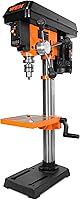
For small parts and a compact bench, the WEN 4206T pairs an 8-inch swing with 2 inches of spindle travel.
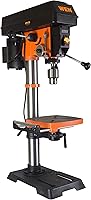
The WEN 10-Inch Variable Speed Drill Press gives you more reach and a larger work surface for wider home-shop pieces.
How do you choose the right drill press swing?
Pick the smallest swing that reaches the holes you plan to drill. A larger swing can help with broad pieces, but it also means a larger machine to place and support.
What size drill press do I need for small parts?
An 8-inch press suits small project parts when the hole locations stay within about 4 inches of the column. It also makes sense when bench space is limited and most of your work fits on a small table.
The WEN 4206T stands about 23 inches tall, with a 7 by 11-inch base and a 6.5 by 6.5-inch height-adjustable table. Its five belt-set speeds range from 750 to 3200 RPM, and the table tilts up to 45 degrees in either direction.
Choose it for brackets, blocks, and other manageable parts. Skip it if you regularly drill far from an edge or need a broader table to support your work.
When is a 10-inch drill press a better fit?
A 10-inch swing offers more reach than an 8-inch model while remaining a benchtop option. The bit center sits about 5 inches from the column, useful for wider parts that still fit comfortably on a bench.
The WEN 10-inch model has 2 inches of spindle travel and an 8 by 7.5-inch beveling table. Its mechanical variable speed control covers 530 to 3100 RPM, with a digital readout to show the current speed.
Choose it if your workpieces often need that extra inch of reach or you want variable speed for different drilling jobs. If your parts fit a compact press and you rarely use the additional reach, the larger machine may not earn its bench space.
When do you need a 12-inch drill press?
A 12-inch swing gives about 6 inches from bit center to column. That reach helps when large panels, jigs, or other wide parts need holes farther from their edges.
The WEN 12-inch model provides 3-1/8 inches of spindle travel and a 9-1/2 by 9-1/2-inch table. It stands about 36.6 inches tall and weighs 85 pounds, so make sure your bench can support it and your shop has room for its height.
Choose this size when you can name projects that use its additional reach or travel. For routine small parts, an 8- or 10-inch press is easier to fit into a limited workspace.
How much spindle travel do you need?
Choose enough spindle travel for the hole depth you need in one stroke. Travel describes how far the bit moves down; it does not change how far from the column you can drill.
The WEN 4206T and 10-inch WEN model each have 2 inches of spindle travel. The 12-inch model’s 3-1/8-inch travel allows a longer stroke before you need to reposition the work.
A deep hole can still take more than one pass. Consider the workpiece thickness, bit length, and clearance below the chuck as the quill moves down.
If the press cannot reach the full depth in one stroke, you may be able to raise the table or reposition the workpiece, depending on its shape. Keep the piece secured throughout; never hold a small or awkward part by hand while drilling.
How much table and bench space should you allow?
Measure your work area and bench before choosing a press. The table needs to support the part, and the base needs a stable surface with room to mount and use the machine.
The example tables range from 6.5 by 6.5 inches on the compact press to 9-1/2 by 9-1/2 inches on the 12-inch model. A bigger table supports more of a part, but clamping or a vise is still needed to keep it from shifting.
Check the height from the bench to any shelf or cabinet overhead. Leave room to raise the table, position longer stock, change bits, and adjust the machine.
A drill press is one part of a small shop. Our guide to benchtop woodworking tools can help you plan where it fits alongside other machines.
Should you choose a benchtop or floor drill press?
A benchtop press works for many home shops when its swing and travel cover the planned work. A floor press may fit a shop that needs more capacity, but first consider its footprint, height, and the kinds of parts you handle.
Compare the maximum workpiece size with the machine’s reach and table. Also make sure your chosen location has a stable base and enough overhead clearance.
Read benchtop or floor drill press: which fits your shop? for a closer look at the tradeoffs. If you’re comparing specific models, see our best drill presses for woodworking at home.
What else matters when sizing a drill press?
Match the chuck, speed range, and controls to the bits and materials you use. Swing alone won’t tell you whether a press accepts your bits or offers a useful speed for your work.
The WEN 4206T and 10-inch model have 1/2-inch keyed chucks; the 12-inch model has a 5/8-inch keyed chuck. The 4206T uses five belt-set speeds, while the other two models have mechanical variable speed controls and digital readouts.
Follow the bit maker’s speed guidance for the material and bit diameter. Before switching on, secure the workpiece with a clamp or vise, check that the bit is tight, and keep hands clear of the moving bit.
Choose a safe location before setting up the press. Bolt the base to a sturdy bench or stand using its mounting holes, keep the cord clear of the work area, and adjust the table so the bit reaches the work without forcing you to lean over it.
After drilling, turn off the machine and wait for the bit to stop before clearing chips or changing the setup. Keep the chuck key in its onboard storage when it isn’t in use, and keep the table and base free of chips so the work sits flat.
Common sizing mistakes include buying for a rare project instead of the work you do often, treating swing as the maximum hole diameter, and overlooking overhead clearance. Another is choosing a large press without checking whether the bench can carry its weight; the 12-inch WEN model weighs 85 pounds.
Sharp bits make clean holes easier to achieve and reduce the effort needed to feed the tool. See how to sharpen drill bits on a bench grinder for a separate bit-care guide.
How do you decide what size drill press you need?
Choose 8 inches for small parts and a compact bench, 10 inches for more reach on wider stock, and 12 inches when holes need to sit about 6 inches from the column. Then confirm the travel, table support, height, and bench capacity match your projects.
Measure your largest regular workpiece and mark the farthest hole location from its edge. Pick a press that can reach that spot while leaving the piece stable on the table.
For general woodworking, buy the smallest size that covers your real work. Compare the WEN drill press models and browse our drill press guides before choosing.
Frequently asked questions
What size drill press is best for a home workshop?
An 8- to 10-inch benchtop drill press suits many home workshops doing small parts, furniture repairs, and general woodworking. Choose by the distance from the bit to the column, the depth you need in one stroke, and the room available on your bench.
Step up when your work regularly needs more reach or table space.
Is an 8-inch drill press big enough for woodworking?
An 8-inch drill press can handle many small woodworking jobs, such as drilling blocks, brackets, and project parts that fit beneath its table. Its swing limits how far from an edge you can place a hole.
Measure your workpiece and check the press's spindle travel before deciding.
What does drill press swing size mean?
Swing is twice the distance from the drill bit's center to the column. An 8-inch swing gives about 4 inches from bit center to column, so you can position a hole roughly 4 inches from an edge when the work is set up properly.
Swing describes reach, not the largest bit the press can use.
Do I need a floor drill press for home projects?
Most occasional home projects can use a benchtop drill press if its reach and table fit the parts. A floor model may suit taller work or a shop that needs more capacity, but account for its footprint and height.
Choose based on the jobs you expect to do and the space you have.