VEVOR vs WEN Drill Press: Which Brand Fits a Home Shop? (November 2026)
For a VEVOR vs WEN drill press, choose WEN for variable speed in a 10-inch format, VEVOR’s 12-inch model for greater reach, or its 10-inch model for five fixed speeds.
On this page (9 sections)
- VEVOR vs WEN drill press: which should you choose?
- How do the WEN and VEVOR speed controls compare?
- Do the 10-inch models offer the same reach?
- When is the VEVOR 12-inch a good fit?
- What helps with alignment and angled drilling?
- How should you set up and care for a benchtop drill press?
- Which model suits different buyers, and who should skip it?
- What common drill press buying mistakes should you avoid?
- Which VEVOR or WEN drill press should you buy?
For a VEVOR vs WEN drill press, choose WEN if you want continuously adjustable speed in a 10-inch format, VEVOR’s 12-inch model if you need more reach, or VEVOR’s 10-inch model if five speed settings are enough. Your best fit depends on the workpieces you drill, how often you change speed and what your bench can support.
The 10-inch models share the same swing, but differ in speed control, weight and features. The larger VEVOR adds reach, while also asking for more room and a stronger bench.
This comparison covers three choices: WEN’s 10-inch variable-speed press and two VEVOR models. Match the machine to your regular work instead of paying for reach or controls you won’t use.
 Best for frequent speed changes
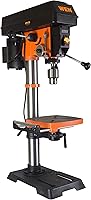
WEN 10-Inch Variable Speed Drill Press

VEVOR vs WEN drill press: which should you choose?
Choose WEN for continuous speed adjustment on a 10-inch press, VEVOR’s 12-inch model for extra reach, or VEVOR’s 10-inch model for five preset speeds. These are distinct choices, so start with the largest workpiece you expect to drill and the kind of speed control you prefer.
The WEN and VEVOR 12-inch models both use variable speed and show current RPM on a digital readout. The VEVOR 10-inch gives you five set speeds instead.
If you routinely move between materials or bit sizes, adjusting across a range may be more convenient.
If the preset choices cover your usual jobs, the simpler control scheme may be enough.
Swing matters when the hole sits far from the edge of a board or other workpiece. Use this drill press sizing guide to compare the reach you need with a 10-inch or 12-inch model.
How do the WEN and VEVOR speed controls compare?
WEN and the VEVOR 12-inch have variable speed, while the VEVOR 10-inch has five fixed settings. Choose based on whether preset steps fit your routine or you want to select speeds across a range.
The WEN adjusts from 530 to 3100 RPM and displays the current RPM. The VEVOR 12-inch adjusts from 530 to 3140 RPM, also with a digital readout.
Those controls let you select a speed between the ends of the range.
The VEVOR 10-inch offers 650, 1050, 1800, 2350 and 3100 RPM. You choose among those five settings rather than dial in any speed you want.
That makes it a sensible match when you’re comfortable working with presets and don’t need to fine-tune between them.
Which drill press speed control fits your projects?
A VEVOR vs WEN drill press decision on speed comes down to variable control versus presets. Pick variable speed if your work often calls for speed changes across a range; pick the VEVOR 10-inch if its five steps cover your common tasks.
Speed is only one part of choosing a setup. Use the bit maker’s guidance and the press manual for material, bit and operating instructions, and secure your workpiece before drilling.
Do the 10-inch models offer the same reach?
Both 10-inch presses have a 10-inch swing, but the WEN also specifies 2 inches of spindle travel. Swing and spindle travel describe different limits, so compare both with the jobs you plan to do.
Swing describes the reach from the column to the drilling area. Spindle travel describes how far the spindle moves down.
A matching swing doesn’t mean the two machines have identical drilling movement or controls.
The WEN includes a 1/2-inch keyed chuck and specifies 2 inches of spindle travel. The VEVOR 10-inch lists a 1/2-inch maximum chuck size.
If you need a particular hole depth, plan the drilling steps and check that the press’s travel suits the task.
A floor press may make more sense if your workpieces or setup needs exceed a compact bench machine. See how benchtop and floor drill presses compare before committing to a format.
When is the VEVOR 12-inch a good fit?
Choose the VEVOR 12-inch when your work needs more swing and your bench has the room and capacity for a heavier machine. It weighs 84.3 pounds and measures 14.37 by 22.44 by 37.4 inches.
The 12-inch model brings variable speed, a digital readout, an X-laser and an LED work light. Those features make sense when the extra reach solves a recurring problem or you want variable speed in the larger size.
Skip it if your regular projects fit within a 10-inch swing or if you can’t reserve a stable location for a larger, heavier press. The WEN measures 13.2 by 19.3 by 33.9 inches and weighs 57 pounds; the VEVOR 10-inch weighs 41.9 pounds and measures 17.5 by 9.3 by 28.7 inches.
Measure the bench surface, ceiling clearance and space around the machine before buying. Leave enough room to place and support the workpiece, reach the controls and adjust the table.
What helps with alignment and angled drilling?
All three models have a tilting table, while the WEN and VEVOR 12-inch also include an X-laser. A laser can help you position the bit over a mark, but it doesn’t replace a careful setup.
The WEN’s 8 by 7.5-inch table bevels 45 degrees left and right. It also includes an adjustable depth stop and a class IIIA 2.5 mW laser.
The VEVOR 10-inch table tilts from 0 to 45 degrees. Its package includes a table assembly, crank handle, table lock handle and chuck key.
The VEVOR 12-inch table also tilts 45 degrees left or right and includes an X-laser and LED work light.
For angled holes, lock the table in the chosen position and check alignment before drilling. For a valuable or hard-to-replace workpiece, confirm the mark and setup on scrap first.
How should you set up and care for a benchtop drill press?
Set up a drill press on a stable, well-supported bench, then secure the machine and the workpiece before use. Follow the manual for assembly, mounting, adjustments and safe operation.
Before drilling, check that the table is locked, the bit is held securely and the workpiece cannot spin or shift. Use a clamp or other suitable hold-down for small or awkward stock, and keep your hands away from the bit.
Unplug the press before changing a bit or making adjustments that could expose you to a moving part. Remove the chuck key before starting, and clear chips with the machine stopped rather than brushing near a spinning bit.
Keep the table and base clear of loose tools and debris. Inspect bits for wear, and follow the manual for cleaning and maintenance.
For bit care, read how to sharpen drill bits on a bench grinder.
Which model suits different buyers, and who should skip it?
The WEN suits buyers who want variable speed and a 10-inch swing; the VEVOR 12-inch suits buyers who need more reach. The VEVOR 10-inch fits a smaller-shop buyer who prefers preset speed choices and a lighter machine.
Choose the WEN if you change speed often, want a digital readout and don’t need more than a 10-inch swing. Skip it if your regular work requires more reach or if you prefer a machine with preset speeds and the lowest weight in this group.
Choose the VEVOR 12-inch if wider workpieces or farther-from-edge holes are a regular part of your projects. Skip it if a 10-inch swing is enough, your bench is small or supporting an 84.3-pound press would be difficult.
Choose the VEVOR 10-inch if its five speeds meet your needs and you want the lightest of these three options. Skip it if you want speed adjustment between presets, a digital speed readout or more than a 10-inch swing.
If you’re comparing machines for a broader home workshop, this guide to benchtop woodworking tools can help you plan which equipment deserves limited bench space. For more drill press options, browse the drill press guides.
What common drill press buying mistakes should you avoid?
The most common mistake is choosing by a single spec instead of checking reach, speed control, footprint and support together. A press that looks capable on paper may still be a poor fit if it can’t handle your workpiece or bench setup.
Don’t treat swing as spindle travel. A 10-inch swing describes reach around the column; the WEN’s 2-inch spindle travel describes how far its spindle moves down.
Don’t assume that similar motor amperage means two presses have the same features or suit the same buyer. The WEN and VEVOR 12-inch each have a 6.2 A motor, but they differ in swing, dimensions, weight and table details.
Don’t overlook how the machine will be mounted or where stock will sit. Measure your bench and typical workpieces, and check the manual’s setup requirements before deciding.
Which VEVOR or WEN drill press should you buy?
For a VEVOR vs WEN drill press, pick WEN for 10-inch variable speed, VEVOR’s 12-inch model for extra swing, or VEVOR’s 10-inch model for five presets and lower weight. Let your recurring work and available bench space make the final call.
The WEN is the clearest fit when continuous speed adjustment and a digital readout matter in a 10-inch press. Choose the VEVOR 12-inch when you need more reach and can support its size and weight.
Choose the VEVOR 10-inch when its swing and five speed settings cover your projects. Before buying, measure your largest workpiece and bench, then compare those needs with the best drill presses for woodworking at home.
Frequently asked questions
Is a VEVOR or WEN drill press better for a home shop?
WEN suits a home shop that wants continuously adjustable speed and a digital readout on a 10-inch press. VEVOR offers a 10-inch model with five fixed speeds and a 12-inch variable-speed model.
Choose based on the workpiece reach you need, your preferred speed control and the space available.
What is the difference between the 10-inch WEN and VEVOR?
The WEN has a 6.2 A motor, mechanical variable speed from 530 to 3100 RPM, a digital readout and 2 inches of spindle travel. The VEVOR has a 3.2 A motor and five set speeds from 650 to 3100 RPM.
Both have a 10-inch swing.
Should I choose a 12-inch drill press?
Choose a 12-inch swing when your work regularly needs more reach than a 10-inch model provides. The VEVOR 12-inch also has variable speed and a digital readout, but it weighs 84.3 pounds and measures 14.37 by 22.44 by 37.4 inches.
Check bench capacity and clearance first.
Does the WEN drill press have variable speed?
Yes. The WEN 10-inch model adjusts mechanically from 530 to 3100 RPM, and its digital readout shows the current speed.
The VEVOR 10-inch uses five fixed settings, while the VEVOR 12-inch model also has variable speed and a digital readout.
How do I choose a drill press swing size?
Choose swing by measuring from the hole location to the edge of your workpiece. A larger swing gives you more room to position wide stock.
Measure the projects you make most often, then use this drill press sizing guide to check whether a benchtop model fits.