How to Use a Band Saw for Beginners
To learn how to use a band saw for beginners, choose a blade for the cut, set the guard close to the work, and feed wood steadily without forcing it. Start with scrap and follow your saw's manual.
On this page (9 sections)
- What should beginners check before using a band saw?
- How do you choose a band saw and blade as a beginner?
- How do you set up for a first band saw cut?
- How do you make a straight cut without forcing the saw?
- How do you cut curves on a band saw?
- How should you handle narrow pieces and dust?
- What common band saw mistakes should beginners avoid?
- How should you care for a beginner band saw?
- What is the best way to choose your first band saw?
To learn how to use a band saw for beginners, start with a stable workpiece, a blade suited to the cut, and a guard set close to the wood. Feed at a steady pace, keep your hands clear of the blade path, wear eye protection, and follow the saw manual.
A band saw can cut straight lines, curves, and thinner pieces ripped from wider stock. Your first goal is control, not speed: practice on scrap, make a cut plan, and stop if the blade wanders or the workpiece becomes hard to guide.
What should beginners check before using a band saw?
Check the blade, guard, table, and work area before switching on the saw. Unplug it before making adjustments, and use the manual for model-specific setup instructions.
Inspect the blade for visible damage and confirm that it faces the correct direction. Check tension, tracking, and the guides as your manual describes.
The blade should sit properly on the wheels and between the guides before you cut.
Set the guard just above the workpiece so it leaves room for the stock to pass while exposing as little blade as practical. Clear scraps and tools from the table, and connect dust collection if your saw has a port.
See which benchtop woodworking tools a home shop needs for ideas on organizing a small work area.
Plan where your hands will be throughout the cut. The board should sit flat without rocking, and you should have enough room to move it without reaching across the blade or bumping into nearby objects.
How do you choose a band saw and blade as a beginner?
Choose a saw whose capacity suits your workpieces, then choose a blade that fits the saw and the cut. A narrower blade can follow tighter curves; a wider blade is generally better suited to straight cuts.
For occasional curves and small woodworking projects, a benchtop model may be enough. The WEN BA3959 has a 9-inch cutting width and can cut up to 3-1/2 inches deep, with a rip fence for straight cuts and a table that bevels up to 45 degrees.
It suits beginners who want a compact saw with a fence and basic accessories included.
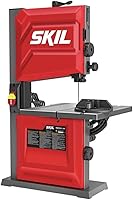
The SKIL BW9501 is another 9-inch benchtop choice. Its two-speed drive, quick tension setting, tracking sight window, and rack-and-pinion table adjustment suit a beginner who wants visible setup cues and convenient angle changes.
Skip either compact saw if your planned stock exceeds its stated capacity; compare larger options in best band saws for a small shop.
Check the blade length and width in your saw manual before buying a replacement. The WEN BA3959 accepts blades that are 59-1/2 inches long and 1/8 to 3/8 inches wide, so a blade with a different length will not fit it.
The POWERTEC replacement blade is 62 inches long, 3/8 inches wide, and has 6 teeth per inch. It is intended for compatible saws that use that size, including some 9-inch models.
Choose it only after confirming your saw accepts a 62-inch blade; it is not a match for the WEN BA3959's blade length.
For more help matching a saw's capacity to your projects, see what size band saw you need for woodworking. If you're choosing between the two benchtop models, the SKIL BW9501 review covers that saw in more detail.
How do you set up for a first band saw cut?
Set the saw up with the power off, then make a test cut in scrap before using project wood. A simple straight cut helps you check blade tracking, feed pressure, and workpiece control.
Mark the cut line and position the fence if you need a straight rip. The fence helps guide the stock, but it cannot make an unstable or poorly supported board safe to cut.
Check that the workpiece lies flat and that the offcut has room to move.
Turn the saw on before the wood touches the blade. Keep your hands on opposite sides of the cut path, with fingers well away from the blade, and guide the stock forward smoothly.
Use a suitable push aid when your hands would otherwise need to approach the blade.
Make a short cut in scrap and watch how the blade follows the line. If it drifts, chatters, or slows, stop and review the blade choice and setup before proceeding.
Don’t compensate by pushing harder.
How do you make a straight cut without forcing the saw?
Keep the work flat on the table and feed it toward the blade at an even pace. Use the fence for a straight rip when the board and cut are stable.
Let the blade do the work. Heavy pressure can make the blade wander or bind, so ease off if the motor labors or the cut starts to move away from the line.
If control does not return, switch off the saw and wait for the blade to stop before checking anything.
For a long board, plan how you will support both the incoming stock and the offcut. A board that tips or twists during a cut can pull your hands toward the blade or pinch the blade.
Never reach over the blade to catch falling stock.
The WEN’s included 1/4-inch blade is a starting point for general cuts, but use the manual and the cut shape to guide replacement blade choices. A blade suited to a tight curve may not track as well through a long, straight rip.
How do you cut curves on a band saw?
Follow the marked curve with small turns, keeping the work flat and moving forward. Choose a blade suited to the curve and leave enough room to steer without twisting the board sharply.
Before turning on the saw, look at the full curve and decide how to approach it. For tight curves, relief cuts from the waste edge toward the line can remove material and give the blade room to turn.
Stop each relief cut before reaching the marked line.
Rotate the workpiece gradually as you feed it. If the blade starts to bind or the board lifts, stop the saw and reassess the cut.
Don’t pull the work backward while the blade is engaged.
A band saw works for many larger curves, while a scroll saw can suit smaller, detailed work. Compare the tools in scroll saw vs jigsaw for cutting curves if your projects call for finer shapes or a different cutting approach.
How should you handle narrow pieces and dust?
Use a stable push aid or jig when a narrow cut would put your fingers too close to the blade. If the workpiece is too small or awkward to control, choose another method or tool.
Keep the stock flat against the table and guide it without squeezing it sideways against the blade. For repeated narrow cuts, use a fence only when the workpiece remains stable and the setup is appropriate.
Stop the saw and wait for the blade to stop before clearing scraps.
Dust collection helps keep debris from building up around the cut. Both the WEN and SKIL have a 2-1/2-inch dust port, so you can connect a compatible vacuum hose.
Keep the table and the area around the saw clear even when dust collection is connected.
What common band saw mistakes should beginners avoid?
Avoid forcing the stock, turning too sharply, and adjusting the saw while it is running. These habits make a cut harder to control and can cause the blade to bind or wander.
A blade that drifts is a signal to stop and inspect the setup, not to steer harder. Check for damage, correct tension and tracking, and guide adjustment according to the manual.
Never reach toward a moving blade to free trapped wood.
Don’t begin a cut without checking that the stock can sit flat and that the offcut has somewhere to go. Don’t back the workpiece out while the blade is engaged, and don’t remove scraps near the blade until the saw has stopped.
Rushing setup is another common mistake. Before each cut, confirm the blade and guard position, clear the table, and think through where your hands and the workpiece will move.
How should you care for a beginner band saw?
Keep the saw unplugged during cleaning and adjustments, and follow the manual's maintenance schedule. Clear dust from the table and accessible areas, and check the blade and guides before a new session.
Replace a dull or damaged blade with one that matches the saw’s required length and accepted width. Don’t assume two saws use the same blade just because both have a 9-inch frame.
After an adjustment, confirm tracking and guide position before making another cut.
Keep replacement blades stored so their teeth cannot snag hands or other materials. If the saw makes an unusual sound or the blade slips, stop using it until you identify and correct the issue.
What is the best way to choose your first band saw?
Choose the WEN if you want its stated capacity and included rip fence for general benchtop work; choose the SKIL if its tracking window and quick tension setting fit your setup routine. Buy the POWERTEC blade only when its 62-inch length and 3/8-inch width match your saw.
For a beginner learning how to use a band saw, the most useful first steps are to set the guard close, check the blade, and practice steady straight cuts in scrap. Move on to curves after you can guide the stock without forcing it, and stop whenever the cut becomes difficult to control.
Frequently asked questions
What is the easiest cut to make on a band saw?
A straight cut on a stable, flat board is a good place to start. Set the fence if you need a straight rip, keep the board flat on the table, and feed it at a steady pace.
Practice on scrap wood before cutting a project piece.
Should you push wood through a band saw?
Feed the wood steadily, but don't force it. If the blade slows, wanders, or binds, stop and check the blade, setup, and cut plan.
Keep your hands out of the blade path, and use a push stick or other aid when the cut or workpiece calls for one.
Can beginners cut curves on a band saw?
Yes, beginners can cut curves by following a marked line with small, controlled turns. Choose a blade suited to the curve, leave room to steer, and avoid twisting the wood sharply.
For a tight curve, use relief cuts or make several passes as appropriate.
What safety gear should you use with a band saw?
Wear eye protection and follow the saw manual for required protective gear. Tie back long hair, avoid loose clothing and jewelry, and keep the table clear.
Use dust collection or suitable respiratory protection for your shop, and never adjust the saw while it is running.