SKIL BW9501 9-Inch Band Saw Review: Worth It? (November 2026)
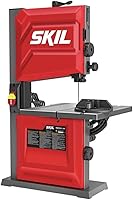
The SKIL BW9501 is a 9-inch benchtop band saw for curves and light ripping, with two speeds, a blade-tracking window and tool-free belt tensioning. This SKIL band saw review recommends it when those adjustments matter more than a stated capacity or an included rip fence.

On this page (11 sections)
- What does the SKIL BW9501 offer?
- How does the SKIL compare with other 9-inch saws?
- What should you check before buying the SKIL?
- How should you set up the SKIL band saw?
- How useful is the two-speed drive?
- What mistakes should you avoid?
- Does the SKIL BW9501 collect dust?
- Is the SKIL BW9501 better than the WEN BA3959?
- Which SKIL band saw alternative should you choose?
- How should you care for a benchtop band saw?
- What is the buying decision for the SKIL BW9501?
The SKIL BW9501 is a 9-inch benchtop band saw for curves and light ripping, with a two-speed drive, visible blade tracking and quick tension adjustment. This SKIL band saw review is for woodworkers choosing a compact machine for shop projects, not a saw to buy on an assumed capacity.
Its strongest case is ease of adjustment: the belt tensioning is tool-free, the table uses rack and pinion adjustment, and a sight window helps you see blade tracking. Its key buying gap is fit: the blade length and cutting capacity are not specified here, so check the manual before committing to stock dimensions or resaw work.
What does the SKIL BW9501 offer?
The SKIL BW9501 combines a two-speed drive, blade guides and tracking aids in a benchtop saw intended for woodworking. It includes a blade, table, miter gauge and dust port.
SKIL BW9501 9-Inch Benchtop Band Saw: Best for visible tracking

- 2.8 amp induction motor
- Two-speed drive system
- Rack and pinion table adjustment
- Blade-tracking sight window
A benchtop option for curved cuts and thinner ripping, with two speeds, quick blade tension setting and a blade-tracking sight window.
Pros
- Tool-free belt tensioning
- Precision ball bearing and lower blade guides
- Rack and pinion table adjustment
- Includes miter gauge and dust port
Cons
- No rip fence included
- Blade length and cutting capacity are not specified here
SKIL specifies precision ball bearing and lower blade guides to support consistent tracking. The blade-tracking sight window gives you a visual reference, while the quick tension setting and tool-free belt adjustment make routine setup changes more direct.
This feature mix suits a small shop where the saw will handle curves, short cuts and occasional lumber thinning. It is less compelling if you need published cut limits, an included fence or a clear resaw capacity before you buy.
Who should buy the SKIL BW9501 band saw?
Buy the SKIL if your regular work is curved cutting and light ripping, and you value quick adjustments and a sight window. Its 9-inch benchtop format fits a shop that needs a dedicated saw without moving up to a larger machine.
Skip it if you routinely work with thick stock, depend on a specific resaw height, or need a fence for repeatable straight cuts. The capacity and blade length are not specified here, so a different model with published dimensions is a better match when those numbers determine whether the saw can do the job.
How does the SKIL compare with other 9-inch saws?
The SKIL stands out for its tracking window and tool-free belt tensioning, while the alternatives make a stronger case on stated capacity, lighting or warranty. Match the saw to the task you repeat most, then check the missing measurements that could rule it out.
| Model | Notable features | Best fit |
|---|---|---|
| WEN BA3959 | Up to 3 1/2 in deep and 9 in wide; rip fence included | Buyers who want stated capacity and a fence |
| SKIL BW9501 | Two-speed drive, sight window, rack and pinion table adjustment | Curve cutting and light ripping |
| DeWalt 9-Inch Two-Speed | LED worklight; two dust port adapters | Detailed work and flexible vacuum connections |
| JET 9-Inch | 3 1/2 in resaw capacity; five-year warranty | Buyers prioritizing stated resaw depth and warranty |
For more options, compare our best band saws for a small shop. If you're new to the tool, how to use a band saw for beginners covers basic setup and safe cutting habits.
What should you check before buying the SKIL?
Check the cutting capacity, blade length and blade width before deciding that the SKIL fits your projects. Those measurements determine whether the saw can handle your stock and which replacement blades you can use.
The SKIL is described as a 9-inch saw, but that throat size alone doesn't tell you the maximum height or width of a cut. Read the manual for those limits and compare them with the largest board you expect to cut, including room to guide it safely.
Blade length and width matter for the same reason. Confirm the specified blade dimensions and the range of compatible blade widths so you can choose a blade for the curves or straight cuts you plan to make.
Also check the accessories against your workflow. A miter gauge is included for guided crosscuts, but the included components don't list a rip fence.
If you need a fence for repeated straight cuts, the WEN BA3959 has one in the box.
The band saw size guide explains how throat size and cutting capacity relate to typical stock. For a wider view of compact equipment, see benchtop woodworking tools for a home shop.
How should you set up the SKIL band saw?
Set up the SKIL on a stable, level work surface, then follow the manual to install and tension the blade, adjust the guides and confirm tracking before cutting. Secure the saw as directed and keep the work area clear.
Start with the blade unplugged while you make adjustments. Check that the blade is seated correctly, then use the quick tension setting as directed for the blade fitted.
A tension setting is a convenience, not a substitute for following the blade maker's guidance or checking that the blade tracks properly.
Use the sight window as a visual check while the blade runs, following the manual's procedure. Adjust the lower and upper guides as directed so they support the blade without interfering with its movement.
Set the table angle before a bevel cut and lock it as the manual instructs. Keep the workpiece supported and move it steadily toward the blade; forcing a turn can pull the cut away from the line or bind the blade.
Connect a compatible vacuum hose to the dust port if you have one. The port accepts a standard 2 1/2-inch hose, so check the fit before arranging the hose around the saw.
How useful is the two-speed drive?
The two-speed drive gives you two operating choices for different cuts, while tool-free belt tensioning simplifies changing the drive setup. The exact speed values are not specified here, so consult the manual for the settings and recommended uses.
Speed is only one part of a clean cut. Choose an appropriate blade, set it up correctly, support the workpiece and feed it at a controlled pace.
A faster setting can't make an unsuitable blade or unsupported board cut well.
For curved cuts, plan the direction and turning radius before feeding the stock. Use relief cuts when needed so narrow offcuts can separate without forcing the blade to turn sharply.
For straight ripping, keep the workpiece aligned and supported. Since the SKIL doesn't include a listed rip fence, consider whether you need an appropriate fence setup for the cuts you make; don't guide stock by placing your hands close to the blade.
What mistakes should you avoid?
The most common avoidable problems are buying without checking capacity, using the wrong blade, and pushing stock too quickly. Each can lead to a poor cut or an unsafe setup.
Don't assume that every 9-inch saw has the same cut height or width. Confirm the SKIL's limits in the manual and compare them with your actual workpieces before buying.
Don't tension a blade by guesswork or make guide adjustments while the saw is running. Use the manual's setup steps, disconnect power before adjustments, and check that the blade tracks as intended before cutting.
Don't twist the workpiece aggressively to follow a curve. Plan the cut, make relief cuts where they help, and let the blade do the work at a steady feed rate.
Finally, don't treat dust collection as a replacement for eye and respiratory protection. Keep the table and surrounding area clean, and follow the manual's safety instructions for operation and blade changes.
Does the SKIL BW9501 collect dust?
The SKIL has a dust port that accepts a standard 2 1/2-inch vacuum hose. A compatible vacuum can collect dust near the cut and help keep the work area clearer.
Check that your hose fits before arranging the saw. If your vacuum uses a different diameter, confirm that an appropriate adapter is available rather than assuming one comes with the SKIL.
Clean dust from the table and nearby surfaces as part of routine care. Keep the hose clear of the workpiece, and follow the manual for cleaning around the blade and guides.
Is the SKIL BW9501 better than the WEN BA3959?
Choose the WEN BA3959 for stated capacity and an included rip fence; choose the SKIL for its tracking window and tool-free belt tensioning. Both are 9-inch benchtop saws with 2.8 amp motors.
The WEN specifies cuts up to 3 1/2 inches deep and 9 inches wide. Its package includes a rip fence, miter gauge and adjustable blade guard, and its table bevels up to 45 degrees.
The SKIL's main advantages are the sight window, lower blade guides and rack and pinion table adjustment. Choose it when those setup features match your work, but check the manual for capacity and blade specifications if your projects depend on exact measurements.
If you need to compare the WEN in more detail, read our WEN BA3959 review. It covers the machine's stated capacity and included accessories.
Which SKIL band saw alternative should you choose?
Choose the DeWalt when an integrated worklight or two dust adapters addresses a real need in your shop. It has two speed settings and includes adapters for 2 1/2-inch and 1 1/4-inch vacuum connections.
Choose the JET if a published 3 1/2-inch resaw capacity and five-year warranty matter most. It also has a table that tilts from 0 to 45 degrees, plus a fence and miter gauge.
These alternatives make their strongest case when their named features solve a specific problem. If you don't need the light, adapter options or longer stated warranty, compare the SKIL's adjustment features and the WEN's included fence and stated capacity instead.
How should you care for a benchtop band saw?
Keep the table, blade area and guides clean, and inspect the blade and tracking before work. Follow the manual for blade changes, tension adjustments and any maintenance steps specific to the saw.
Disconnect power before cleaning around the blade or changing settings. Remove dust from the work surface so the stock sits flat, and check that the blade is undamaged and seated properly before restarting.
Store compatible blades where they won't be bent or damaged, and use a blade suited to the cut. A dull or unsuitable blade can make it harder to follow a curve and can encourage you to push too hard.
What is the buying decision for the SKIL BW9501?
Buy the SKIL BW9501 for curves and light ripping when quick adjustments and a tracking window matter most. Before you order, confirm its cutting capacity and blade requirements in the manual.
Choose the WEN BA3959 if you want a rip fence and clearly stated cut dimensions. Choose the JET for its stated resaw capacity and longer warranty, or the DeWalt if its worklight and dust adapters fit your workspace.
Once you settle on a saw, use our beginner's band saw guide to plan setup and safe cuts.
Frequently asked questions
Is the SKIL BW9501 good for woodworking?
The SKIL BW9501 suits woodworking jobs such as curved cuts and ripping lumber into thinner pieces. Its two-speed drive, lower blade guides and miter gauge support those tasks, while the steel base helps stabilize the saw.
Check the manual for the cutting capacity and blade requirements before planning around a specific board size.
Does the SKIL BW9501 include a rip fence?
The SKIL BW9501 includes a blade, table, miter gauge and dust port, but not a rip fence. If you want a fence in the box, the WEN BA3959 includes one and specifies cuts up to 3 1/2 in deep and 9 in wide.
What dust hose fits the SKIL BW9501?
The SKIL BW9501 dust port accepts a standard 2 1/2-inch vacuum hose. Check your vacuum's hose size before buying, since the port information does not specify an adapter for other diameters.
Keep the hose positioned so it can collect dust without interfering with the workpiece.
Can the SKIL BW9501 make angled cuts?
The SKIL BW9501 has rack and pinion table adjustment for quick angle changes, but its maximum bevel angle is not specified here. Check the manual for the adjustment range before planning angled cuts.
Use the miter gauge to guide crosscuts.