What Size Band Saw Do I Need for Woodworking?
For most home woodworking, choose a band saw with at least 6 inches of cutting height and about 9 inches of cutting width. Go smaller for thin stock and curves, or larger if your projects need more resaw capacity.
On this page (7 sections)
For most home woodworking, choose a band saw with at least 6 inches of cutting height and about 9 inches of cutting width. Choose a smaller saw for thin stock and curves, or a larger one when your projects need more resaw capacity.
The right size depends on the thickest and widest wood you plan to cut, plus the space you have for the machine. Match the saw's capacity to your work.
What size band saw do you need for woodworking?
Start with cutting height and cutting width. Cutting height limits the thickness of stock you can pass through, while cutting width limits how far a board can extend from the blade toward the frame.
For many small-shop projects, a 9 or 10 inch saw offers a useful balance of capacity and footprint. Compare the stated cutting width and height with your project needs.
If you'll mainly cut thin boards, curves, and small parts, a compact benchtop saw may be enough. For taller stock, consider a model with greater height capacity.
How much cutting height do you need?
Choose a cutting height that covers the thickest wood you expect to cut. A saw with 3-1/2 inches of height allows less room for taller stock than one rated for 5 or 6 inches.
The WEN BA3959 cuts up to 3-1/2 inches deep. That may suit small projects and curves, but leaves less room for taller stock.
The Rikon 10-3062S offers up to 5 inches of cutting height, while the WEN BA3962 offers up to 6 inches. Compare those capacities with your project dimensions and setup.
If resawing is a regular part of your work, consider cutting height and blade range along with cutting width. Follow the saw's instructions for the material and cut you plan to make.
How wide should a band saw's throat be?
Pick a cutting width that fits the widest board you need to cut. A 9 inch cutting width works for many smaller projects; more width helps when you handle broader stock.
The WEN BA3959 has a stated cutting width of 9 inches. The Rikon 10-3062S cuts up to 9-5/8 inches wide, and the WEN BA3962 up to 9-3/4 inches.
A wider cutting capacity can help with broader panels. Think about how you'll support and guide the wood, and leave enough room around the machine to control it.
For a first look at setup and basic cuts, see how to use a band saw for beginners.
Does a larger band saw make better curves?
Not by itself; blade choice and setup matter too. A smaller blade can turn tighter curves, while a wider blade is better suited to straighter cuts.
Check which blade widths the saw accepts before you buy. The WEN BA3959 accepts blades from 1/8 to 3/8 inches wide, while the Rikon 10-3062S and WEN BA3962 accept blades up to 1/2 inch.
A larger saw may offer more room for tall or wide stock, but a compact model can fit more easily into a small shop. Match the blade to the curve and material, and follow the saw's setup instructions.
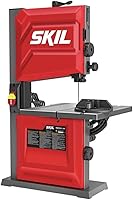
The SKIL BW9501 9-inch band saw review covers a compact option. For another curve-cutting tool, compare a scroll saw and jigsaw.
How much space does the saw need?
Measure the floor or bench area, plus the room needed to feed and handle wood. A saw's footprint is only part of the space you need to control cuts.
A benchtop saw can suit a shop with limited floor space if you have a sturdy bench and enough clearance around the table. A model with a stand uses floor area, so consider where you'll place it and how much room long boards need on either side.
The WEN BA3959 is a benchtop model. The Rikon 10-3062S and WEN BA3962 include stands.
Compare more compact options in our guide to the best band saws for a small shop.
Which band saw size fits common woodworking jobs?
Match the saw to your largest regular job, not an occasional one-off cut. A small saw can handle many curves and narrow boards, while taller stock calls for more cutting height.
- Small crafts and curves: a 9 inch saw may be enough if its height and blade range fit your work.
- General home-shop work: a 10 inch saw with around 5 inches of height gives you more room for varied stock.
- Taller stock and resawing: look for greater cutting height, and confirm the saw and blade are suited to the cut.
These are starting points, not guarantees about a particular cut. Read the saw's instructions, choose a suitable blade, and plan support for the workpiece.
Which band saw size should you choose?
Choose a 9 inch benchtop saw if your work is mostly small parts and curves, and its cutting height covers your stock. The WEN BA3959 has up to 3-1/2 inches of cutting height and a 9 inch cutting width.
Choose a 10 inch saw if you need a stand and more cutting height. The WEN BA3962 reaches 6 inches, while the Rikon 10-3062S reaches 5 inches; compare their stated capacities with the thickest stock you expect to cut.
For setup and safe work habits, continue with band saw basics for beginners. If a compact footprint is your main constraint, see our guide to the best band saw for a small shop.
Frequently asked questions
What size band saw is best for a beginner?
A 9 or 10 inch band saw can suit a beginner making small furniture, crafts, and curved cuts. Check the saw's cutting height and width against your stock, then consider the blade widths it accepts.
A larger machine is useful when your projects need its extra capacity.
Is a 9-inch band saw big enough for woodworking?
A 9-inch band saw can handle many small-shop jobs, including curves and stock up to its stated cutting height. The WEN BA3959, for example, cuts up to 3-1/2 inches deep and 9 inches wide.
It may be limiting for thick resaw cuts.
What does band saw throat size mean?
Throat size is the distance from the blade to the frame, which limits how wide a board you can move past the blade. A 9-inch throat is suited to narrower stock; wider panels need a larger capacity.
Check the machine's stated cutting width before buying.
How much cutting height do I need on a band saw?
Choose cutting height based on the thickest stock you expect to cut, with room to control it. A 3-1/2-inch capacity suits thinner boards and small parts, while 5 or 6 inches accommodates taller stock.
Resawing thicker boards may call for a larger saw.