9 Best Helical Planer (November 2026)
The best helical and spiral cutterhead planers include the WEN PL1326 13-Inch Spiral Planer for general home-shop stock, the WEN PL1337 13-Inch Two-Speed Spiral Planer for varied feed speeds, and the Rikon 25-135H 13-Inch Helical Planer for repeat thickness batches.
On this page (4 sections)
The WEN PL1326 is the best helical planer for most home shops that want a 13 in benchtop machine with a spiral cutterhead and one steady feed rate. If your work calls for different speeds, the WEN PL1337 and Rikon 25-135H add a slower option, while JET stands out for four-sided carbide inserts.
Helical and spiral planers use multiple small cutters arranged around a rotating head. The designs vary in insert material, cutting edges, feed settings, dust connections and repeat-thickness controls, so match those details to the lumber you actually prepare.
If you’re comparing other benchtop options, start with our best benchtop planers for a home workshop. For the basic job a planer does, see what a thickness planer is used for.
Our picks at a glance
-
1

-
2
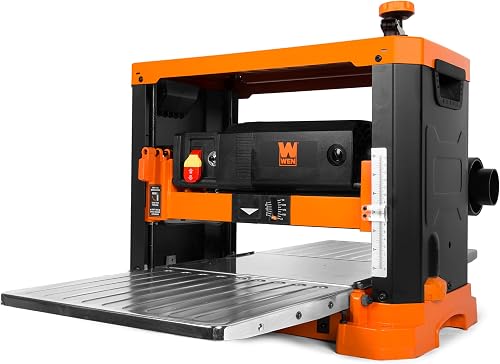 Best for varied feed speeds
WEN PL1337 13-Inch Two-Speed Spiral Planer
8.7/10 our score
See it on Amazon -
3
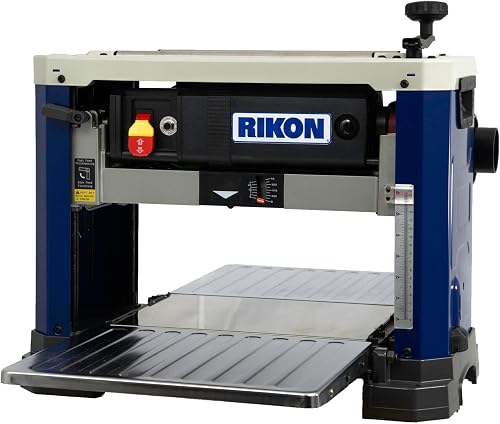 Best for repeat thickness batches
Rikon 25-135H 13-Inch Helical Planer
8.5/10 our score
See it on Amazon
- 4
 Check it
Cutech 40800H 13-Inch Spiral Planer
Best for two-speed Cutech features - 5
 Check it
JET 13-Inch Helical Benchtop Planer
Best for carbide-edge rotation - 6
 Check it
Cutech 40600H 13-Inch Spiral Planer
Best for single-speed Cutech use - 7
 Check it
Cutech 40700H 12.5-Inch Spiral Planer
Best for boards under 12.5 in - 8
 Check it
FindBuyTool MB320 13-Inch Helical Planer
Best for depth-stop batches - 9
 Best for dual-roller feedingCheck it
Which best helical planer fits your shop?
The WEN PL1326 suits general thicknessing, while two-speed models give you more control over feed pace. These picks are ordered by score, with the main differences coming down to width, cutterhead edges, repeat settings and dust handling.
| Product | Best for | Width | Cutterhead | Feed rate | Our score |
|---|---|---|---|---|---|
| WEN PL1326 13-Inch Spiral Planer | general home-shop stock | 13 in | 26 rotatable HSS blades | 26 FPM | 8.9 |
| WEN PL1337 13-Inch Two-Speed Spiral Planer | varied feed speeds | 13 in | 26 rotatable HSS blades | 8.7 | |
| Rikon 25-135H 13-Inch Helical Planer | repeat thickness batches | 13 in | 26 two-edge HSS inserts | 8.5 | |
| Cutech 40800H 13-Inch Spiral Planer | two-speed Cutech features | 13 in | 26 two-sided tungsten carbide inserts | 8.4 | |
| JET 13-Inch Helical Benchtop Planer | carbide-edge rotation | 13 in | 30 four-sided carbide inserts | 24.6 FPM | 8.3 |
| Cutech 40600H 13-Inch Spiral Planer | single-speed Cutech use | 13 in | 26 two-sided tungsten carbide inserts | Single speed | 8.2 |
| Cutech 40700H 12.5-Inch Spiral Planer | boards under 12.5 in | 12.5 in | Tungsten carbide inserts | Single speed | 8.1 |
| FindBuyTool MB320 13-Inch Helical Planer | depth-stop batches | 13 in | 40 tungsten carbide inserts | 27.5 FPM | 7.7 |
| VEVOR 13-Inch Spiral Planer | dual-roller feeding | 13 in | 24 spiral alloy blades | Single speed | 7.4 |
Best helical planer for a simple setup
The WEN PL1326 is the best fit for general home-shop stock when a single feed speed is enough. Its 13 in capacity, rotatable HSS blades and material removal gauge cover the needs of common furniture and shop projects without extra feed choices.
WEN PL1326 13-Inch Spiral Planer: Best for general home-shop stock
- 26 staggered, rotatable HSS blades
- 13 in cutting width
- 26 FPM feed rate
- Onboard material removal gauge
The 26-blade spiral head and 13 in width make this a strong fit for general home-shop thicknessing. Its material removal gauge helps you track the depth of each pass.
Pros
- Rotatable blades
- 13 in width
- Material removal gauge
Cons
- One feed speed
- No two-speed finish setting
It handles boards up to 13 in wide and 6 in thick. The onboard gauge shows the cutting depth of each pass, helping you plan the reduction before feeding a board.
The 26 FPM feed rate stays fixed. That makes this model a weaker match if you often want to slow down for a finish-focused pass, but a sensible choice if you prefer a simple routine.
A depth stop helps return to a chosen thickness, and the adjustable dust port gives chips a path away from the cutterhead. Height-adjustable infeed and outfeed tables support stock as it enters and leaves the machine.
Set it on a stable work surface and secure it through its predrilled base holes. Choose a different model if you specifically need two feed speeds or a more elaborate repeat-cut workflow.
Best helical planer for two feed speeds
The WEN PL1337 suits projects that alternate between faster dimensioning and a slower finishing pass. Its 16 and 26 FPM settings add useful control while retaining the 13 in width and 26-blade HSS cutterhead of the PL1326.
WEN PL1337 13-Inch Two-Speed Spiral Planer: Best for varied feed speeds
- 26 staggered, rotatable HSS blades
- 26 or 16 FPM feed rates
- Up to 1354 cuts per inch
- Depth stop and material removal gauge
Two feed speeds let you choose quicker dimensioning or a slower finishing pass. It keeps the 13 in width and 26-blade cutterhead of the PL1326.
Pros
- Two feed speeds
- Up to 1354 cuts per inch
- Workpiece return rollers
Cons
- More settings to choose
- No stated dust collection airflow
At the faster setting, the planer is suited to quicker stock removal; the slower setting reaches up to 1354 cuts per inch. The material removal gauge and depth stop support repeat work, and the return rollers let you bring a board back toward the infeed side.
It also includes a combination 2-1/2 in and 4 in dust port, onboard wrench storage and a two-year warranty. Those details make it a practical fit for a shop that will use both feed settings and wants the tools and hose connections close at hand.
Skip this model if you expect to leave the planer at one speed for nearly every job. The single-speed PL1326 gives you the core 13 in capacity and spiral head without paying attention to an extra lever.
Best helical planer for repeat thicknessing
The Rikon 25-135H is the pick for batches of boards that need a consistent target thickness. Its repeat-cut control, thickness scale and two feed rates suit a workflow where you process several pieces to the same dimension.
Rikon 25-135H 13-Inch Helical Planer: Best for repeat thickness batches
- 26 two-edge HSS inserts
- 16 or 26 SFPM feed speeds
- Repeat-cut control
- Dust hood with hose adapter
Its repeat-cut control and thickness scale suit batches of boards that need a consistent target thickness. Two feed speeds help balance material removal and finish.
Pros
- Two-edge inserts can be rotated
- Two feed speeds
- Dust hood and adapter included
Cons
- Base material is aluminum
- No return rollers
The six-row cutterhead uses 26 two-edge HSS inserts. When an edge wears or gets nicked, an insert can be rotated to use the other edge, and the 16 or 26 SFPM feed choices help balance pace with surface quality.
A threaded four-post head support, depth gauge and repeat-cut setting help manage height adjustments between passes. Rikon also includes a dust hood and an adapter for 4 in collector hoses or 2-1/2 in shop-vac connections.
Choose it when repeat thickness and flexible feeding matter more than return rollers. If your main goal is simply a general-purpose 13 in planer, the WEN PL1326 is more direct.
For more on the role of a thickness planer, read our guide to what a thickness planer does.
Best helical planer for two-speed Cutech features
The Cutech 40800H is for woodworkers who want two speeds, an eight-position depth stop and board return rollers in one machine. Its 16 FPM slower setting is useful for a deliberate finish pass.
Cutech 40800H 13-Inch Spiral Planer: Best for two-speed Cutech features
- 26 two-sided tungsten carbide inserts
- 16 FPM slower feed rate
- Eight-position depth stop
- Board return rollers
This 13 in model pairs two feed speeds with an eight-position depth stop and board return rollers. Cutech describes its four-lead-screw design as a snipe minimizer.
Pros
- Two feed speeds
- Depth stop for repeat cuts
- Flip dust hood
Cons
- Faster feed rate not specified
- Dust collector not included
The six-row head uses 26 two-sided tungsten carbide inserts. Cutech describes the four-lead-screw design as a snipe minimizer, and the front scale indicates how much material the next pass will remove.
The flip dust hood can direct chips out the back or connect to dust collection. Return rollers help move stock toward the front for another pass, which is convenient when preparing a batch.
The faster feed rate is not specified, so this is a poor match if you need to compare exact high-speed output. Choose it for the combination of a slower feed, repeat stop and integrated snipe-focused design.
Best helical planer for carbide insert edges
The JET planer suits a small shop that prioritizes carbide cutting edges and a stated electrical and dust setup. It has 30 four-sided inserts, five spare inserts and folding tables for longer stock or compact storage.
JET 13-Inch Helical Benchtop Planer: Best for carbide-edge rotation
- 30 four-sided carbide inserts
- 13 in width and 6 in thickness capacity
- 24.6 FPM feed rate
- Five spare inserts included
The 30 four-sided carbide inserts each offer another edge when rotated. JET recommends a dedicated 20-amp circuit for this 120 V planer.
Pros
- Four edges per insert
- Five spare inserts
- Folding tables
Cons
- Dedicated 20-amp circuit recommended
- Not for plywood, painted or reclaimed lumber, or end grain
Each insert can be turned 90 degrees to use a fresh edge. The 13 in width and 6 in thickness capacity handle common benchtop planer stock, with a 24.6 FPM feed rate.
JET specifies this machine for solid hardwood and softwood. It is not intended for plywood, painted or reclaimed lumber, or end grain, and boards need to meet the stated minimum dimensions of 14 in long, 3/16 in thick and 3/4 in wide.
JET recommends a dedicated 20-amp circuit and at least 550 CFM of dust collection. Skip this option if your shop cannot provide those connections or if you need to plane sheet goods or reclaimed stock.
Best helical planer for single-speed Cutech use
The Cutech 40600H suits a shop that wants the brand’s insert layout and snipe-minimizing design but does not need two feed rates. Return rollers, a depth indicator and an eight-position stop make repeat passes easier to organize.
Cutech 40600H 13-Inch Spiral Planer: Best for single-speed Cutech use
- 26 two-sided tungsten carbide inserts
- 13 in width
- Eight-position depth stop
- Board return rollers
This single-speed option keeps the Cutech insert design, depth stop and return rollers. It suits a shop that does not need to switch feed rates.
Pros
- Two-sided inserts
- Depth of cut indicator
- Flip dust hood
Cons
- Single-speed feed
- Cutting depth capacity not specified
Its six-row spiral head uses 26 two-sided tungsten carbide inserts. The flip dust hood can send chips out the back or connect to a dust collector.
Cutech’s four-lead-screw and coupling design is intended to minimize snipe. That can help when board ends matter, though careful support and feeding still matter on any benchtop planer.
Pick this model if single-speed operation matches your routine. If your stock varies and you want a slower setting for finish passes, compare the 40800H before choosing.
Best helical planer for boards under 12.5 in
The Cutech 40700H makes sense when your stock stays within its 12.5 in cutting width. It keeps the depth indicator, board return rollers and snipe-minimizer approach of the wider Cutech models.
Cutech 40700H 12.5-Inch Spiral Planer: Best for boards under 12.5 in
- 12.5 in cutting width
- Tungsten carbide inserts
- Snipe minimizer
- Board return rollers
The 12.5 in capacity can suit boards that do not need the full 13 in width. Its return rollers and depth indicator help with repeated stock preparation.
Pros
- Narrower width for smaller stock
- Board return rollers
- Depth of cut indicator
Cons
- Less width than the other 13 in picks
- No two-speed feed
The six-row cutterhead uses tungsten carbide inserts, and the feed is single speed. The return rollers make repeated trips through the machine more manageable, while the depth indicator shows the amount planned for the next pass.
This model is a poor fit if you regularly work with boards close to or wider than 13 in. Measure your widest lumber, including pieces you may want to use later, before settling for less capacity.
Choose it when 12.5 in is enough and the return rollers suit your workflow. For extra width or two-speed feeding, look at the 13 in alternatives.
Best helical planer for depth-stop batches
The FindBuyTool MB320 suits batch work where preset depth positions are useful. Its four-row cutterhead has 40 tungsten carbide inserts, and the eight-position depth stop helps repeat a selected thickness.
FindBuyTool MB320 13-Inch Helical Planer: Best for depth-stop batches
- 40 tungsten carbide inserts
- 13 in width
- 27.5 FPM feed rate
- Eight-position depth stops
Its pre-installed four-row head uses 40 tungsten carbide inserts, and the machine has eight depth-stop settings. The feed rate is 27.5 FPM.
Pros
- 40 inserts
- Eight depth-stop settings
- Folding extension boards
Cons
- No second feed speed
- Support details not specified
The 13 in model feeds at 27.5 FPM and has folding extension boards that add work support. It also includes a dust hood, and its 120 V, 15 A motor has overload protection.
This is a single-speed machine, so it offers no slower feed setting for finish-focused passes. Use light cuts to avoid overloading, and skip it if feed-speed choice is high on your list.
Pick it when the insert count, stop settings and folding support fit your priorities. Compare the available service and replacement-insert path before making it the center of a long-term workflow.
Best helical planer for dual-roller feeding
The VEVOR planer is a fit for a small shop that values dual-roller feeding and common dust-hose compatibility. Its 13 in width, 6 in height capacity and 28.2 in worktable cover typical benchtop planer stock.
VEVOR 13-Inch Spiral Planer: Best for dual-roller feeding
- 24 spiral alloy blades
- 13 in width and 6 in height
- Dual-roller feeding system
- 2 in and 4 in dust hose compatibility
A dual-roller feed system and compatibility with 2 in and 4 in dust hoses make this a practical feature set for a small shop. The planer has a single-speed feed.
Pros
- Dual-roller feed
- Two dust hose sizes
- 13 in width
Cons
- Single-speed feed
- Insert rotation details not specified
The cutterhead has 24 spiral alloy blades, and the machine uses a single feed speed. Its dust port works with 2 in and 4 in hoses, but the vacuum or dust bag is separate.
The dual rollers are designed to support steadier feeding. That feature does not remove the need to support long boards at both ends, especially if the machine’s infeed and outfeed tables are shorter than the work.
Choose it if the roller feed and hose options line up with your shop. If you want individually rotatable inserts or two feed speeds, the WEN, Rikon and Cutech options offer clearer matches.
How do you choose the best helical planer?
Choose a helical planer by matching its width, feed options, insert style, dust setup and electrical needs to the work you do. The cutterhead label alone will not tell you whether a machine fits your boards or shop.
How much planer width do you need?
A 13 in planer accepts wider boards than the 12.5 in Cutech 40700H. Measure the widest lumber you expect to plane, then leave a margin for future projects instead of buying to the exact width of your current stock.
Also compare depth of cut across different board widths. Rikon specifies a maximum 1/8 in cut on boards up to 6 in wide and 1/16 in from 6 in to 13 in; JET gives the same width-based limits.
Those limits matter because a wide board puts more load across the cutterhead than a narrow one. Make several shallow passes rather than expecting a planer to remove a large amount in one trip.
Do two feed speeds matter?
Two feed speeds are useful when you alternate between dimensioning and finishing. The WEN PL1337 and Rikon 25-135H offer 16 and 26 FPM or SFPM settings, while the Cutech 40800H includes a 16 FPM slower setting.
A single-speed model can be the better choice if you do similar work every time and want fewer adjustments. Pay for two settings when you have a real use for both, such as rough sizing followed by a slower finish-focused pass.
What should you compare in the cutterhead?
Compare the insert material, number of cutting edges and the way the edges are changed. WEN and Rikon use rotatable HSS blades or inserts, JET uses four-sided carbide inserts, and the Cutech models use two-sided tungsten carbide inserts.
More edges can make a cutterhead’s maintenance routine more convenient, but replacement compatibility and access matter too. Before buying, check that you can identify the correct replacement insert and follow the maker’s instructions for rotating or replacing it.
How should you plan dust collection?
Match the port and hose to the collector or shop vacuum you already own. Rikon includes an adapter for 4 in and 2-1/2 in connections, the WEN PL1337 includes a dual-size port, and JET recommends at least 550 CFM.
A port that fits your hose does not supply the collector itself. Plan where chips will go, keep the hose from pulling on the planer, and clear chips from the work area before another pass.
What shop space and power does a benchtop planer need?
A benchtop planer needs more room than its footprint because long boards need support before and after the cutterhead. Folding extension tables can help with storage, but they do not eliminate the need to support lumber as it travels.
Check the electrical recommendation against your actual outlet and circuit. JET recommends a dedicated 20-amp circuit, while several other models are described with 15-amp motors; don’t assume every planer should share a circuit with another high-draw tool.
How do you set up and use a helical planer?
A careful setup starts with a stable, secured machine, clear infeed and outfeed paths, and dust collection that matches the port. Take a light first pass and check the board before increasing the cut.
Secure the planer through its mounting holes where available, then arrange support so a long board stays level as it enters and exits. Keep the path clear of offcuts, cords and anything that could catch the stock.
Set the cutterhead for a small reduction, then use the material removal gauge or depth indicator where the model has one. If you are preparing several boards, use a depth stop or repeat setting to return to the target rather than resetting by eye every time.
Feed boards steadily and avoid forcing them. For a batch, mark each board and keep track of which face has been planed so you can bring the pieces to a consistent thickness without removing more wood than needed.
Snipe is a deeper cut near the end of a board. Support the work so it enters and exits level, and consider sacrificial boards before and after valuable stock when appropriate; built-in snipe-minimizing features can help, but they do not replace sound feeding and support.
What mistakes should you avoid?
The most common mistakes are taking too much material at once, feeding unsupported boards, ignoring the width-based cut limit and choosing a machine without checking its dust or electrical needs. Each can lead to poor results or an awkward shop setup.
Do not treat the maximum depth of cut as a routine setting for every board. Reduce the cut when the stock is wide, figured or demanding, and make multiple passes instead of forcing the machine through a heavy cut.
Avoid sending stock through without checking that it is suitable for the planer. JET specifically excludes plywood, painted or reclaimed lumber, and end grain from its intended use; follow the chosen model’s instructions for acceptable material.
Do not neglect insert care after a nick or rough finish appears. Stop the machine and follow the model manual for checking, rotating or replacing inserts, using the right driver and keeping fasteners secure.
Which helical planer should you choose?
Choose the WEN PL1326 for straightforward 13 in home-shop thicknessing, the WEN PL1337 or Rikon 25-135H for two feed speeds, and JET if its four-sided carbide inserts and shop requirements fit your routine. Pick the narrower Cutech only when 12.5 in is enough, and skip any model whose power, dust or board capacity does not match your setup.
If you are deciding between a helical head and a conventional knife planer, compare the tradeoffs in our WEN PL1326 vs DeWalt DW735 guide. If a board needs a flat face before thicknessing, see how a planer sled flattens boards without a jointer.
Our top 3 picks at a glance
-
1
-
2
Best for varied feed speeds
WEN PL1337 13-Inch Two-Speed Spiral Planer
8.7/10 our score
See it on Amazon -
3
Best for repeat thickness batches
Rikon 25-135H 13-Inch Helical Planer
8.5/10 our score
See it on Amazon
Frequently asked questions
What is the difference between a helical and spiral planer?
Both names describe cutterheads that use multiple small cutting inserts arranged around the head. Brands may use the terms differently, so compare the insert material, number of edges, replacement method and feed speeds instead of relying on the name alone.
The planers here include HSS and carbide inserts.
Are helical planers quieter than straight-knife planers?
Some helical designs are rated quieter than a comparable straight-knife model. JET rates its helical planer at 91 dB and compares it with 93 dB for its straight-knife version.
Sound at your bench depends on the planer, wood, room and dust collection.
Can you rotate planer inserts instead of sharpening them?
Some insert cutterheads let you rotate a worn or nicked cutting edge to use another edge. The WEN and Rikon models here have rotatable HSS blades or inserts, while JET uses four-sided carbide inserts.
Check the model instructions for the correct order and fastener handling.
Do spiral planers need dust collection?
Planers make chips that need a clear path away from the cutterhead and work area. Several picks include dust ports or hoods, and JET recommends at least 550 CFM of dust collection for its model.
Match your hose and collector setup to the planer and keep the work area clear.