DeWalt DW734 Planer Review: Worth It? (November 2026)
The DeWalt DW734 is a solid buy for everyday board surfacing if you flatten rough stock up to 12-1/2 inches wide and want a fine finish without a premium price tier. Pick a different model if you plane highly figured hardwood or need a machine that stays light to move.
On this page (9 sections)
- The DeWalt DW734 at a glance
- Who the DeWalt DW734 suits
- Specs that matter in daily use
- Setting up the DW734 for clean boards
- Feeding boards and keeping the finish fine
- Knife changes and routine care
- Trade-offs to weigh before you buy
- How the alternatives compare
- Verdict: buy the DW734 for everyday board surfacing
The DeWalt DW734 is a solid buy for everyday board surfacing, and the dewalt dw734 planer reviews that keep coming back to one point are right: this machine flattens rough boards to a fine finish without premium-tier extras. Its 12.5-inch width, 15-amp motor and four-column carriage lock cover most home-shop stock.
If your work is mostly straight-grained boards headed for furniture, trim or shelving, the DW734 handles it. Pick a different planer only when you plane highly figured hardwood or move the machine between shops often.
The DeWalt DW734 at a glance
The DW734 is a 12.5-inch benchtop planer built around a three-knife cutter head. It targets the two problems that annoy benchtop planer owners most: snipe at the ends of a board and a rough surface after a deep pass.
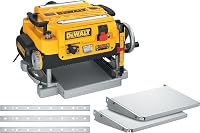
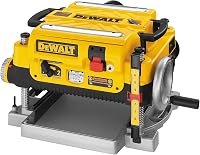
DeWalt DW734 12.5-Inch Planer: Best for everyday board surfacing

- 15-amp, 20,000 rpm motor
- Three-knife cutter head
- Four-column carriage lock
- 33-1/2 in infeed and outfeed support
A 15-amp benchtop planer with a three-knife head and a four-column carriage lock that targets snipe. Good for turning rough boards into flat, even stock in a home shop.
Pros
- Three-knife head makes 96 cuts per inch for a fine finish
- Four-column carriage lock cuts the movement that causes snipe
- Reversible knives are disposable and easy to change
- Long tables give 33-1/2 inches of material support
- Turret depth stop returns to common depths
Cons
- Weighs about 80 lb, so moving it takes two people
- Straight knives rather than a helical head
- Dust hood is included, but the hose and extractor are not
The dust hood is the only extra in the box. You supply the hose and extraction, which matters because this planer moves a lot of chips when you take heavy cuts.
Who the DeWalt DW734 suits
Buy the DW734 if you surface rough lumber into flat, even boards at a steady pace. That covers furniture blanks, cabinet parts, glued-up panels, shop shelving and reclaimed boards you want to clean up.
The 12.5-inch width is the key number. It takes stock up to that width in a single pass, so 12-inch shelving and most furniture panels fit without ripping first.
If your projects stay under that size, you rarely need a wider machine.
It also suits a shop that wants a fine off-the-planer finish. A three-knife head at high speed leaves a surface that often needs only light sanding, which saves time on a batch of boards.
Skip it if you only dress a few boards a year or if you plane highly figured hardwood. A helical head handles tearout better, and the lower-end planers cost less for occasional use.
Specs that matter in daily use
The 15-amp, 20,000 rpm motor is the headline spec, and it's what lets the DW734 take deeper passes in hardwood without bogging down. In daily use that means fewer passes per board and less time feeding stock through.
The cutter head runs at 10,000 rpm and carries three knives, which works out to 96 cuts per inch. That's the number behind the fine finish, and it's the reason you can go from planer to finish sander with less stock removal.
The four-column carriage lock is the spec most owners notice after a few boards. It locks the cutter head carriage in place to cut the movement that causes snipe, so the first and last few inches of a board stay closer to the set thickness.
The disposable, reversible knives flip or swap rather than needing a sharpening service. DeWalt says that arrangement gives 30% more knife life, and a fresh edge is a two-knife job you can do in the shop.
The tables add up to 33-1/2 inches of infeed and outfeed support. Long boards stay level as they enter and leave the cut, which also helps hold snipe down.
Two more features do quiet work. The material removal gauge and extra-large thickness scale let you set a pass and read the result clearly.
The turret depth stop returns the head to your most-used depths without dialing them in again.
One spec you'll feel on moving day: the planer weighs about 80 lb. Put it on a mobile base or a dedicated bench, and don't plan to carry it up and down stairs often.
Setting up the DW734 for clean boards
Set the planer on a firm, level bench at a comfortable feed height, then fit the dust hood before the first board. A stable base keeps the tables aligned and stops the machine from walking during a heavy pass.
Attach the infeed and outfeed tables and check that their surfaces sit level with the planer bed. A table that droops or rises at the joint pushes the board off line as it enters, which shows up as snipe or a wedge-shaped cut.
Check the knives and the cutter head before the first use. Confirm the knives are seated and the retaining screws are tight, then run a scrap board through to see how the machine behaves.
Set the depth of cut conservatively at first. The motor will take deep passes, but shallow passes give a better finish and put less strain on the knives and the feed rollers.
Connect the dust hood to a shop vacuum or dust collector. Chips pile up fast, and a blocked exhaust can pack the cutter head area and spoil the finish.
Test the carriage lock on a scrap board. Run one pass locked and one unprotected at the same setting and compare the ends.
That tells you in a few minutes how much the lock helps on your bench.
Feeding boards and keeping the finish fine
Feed boards with the grain and at an even speed, and let the rollers pull the stock rather than pushing it through. An uneven feed shows up as chatter marks across the surface.
Take lighter passes as you near final thickness. The three-knife head leaves a cleaner surface on a light pass, and the material removal gauge helps you track how much stock each pass takes off.
Plane both faces when a board needs to end up flat and even. Surface one face, flip the board end for end between passes so the grain direction balances, and check the thickness scale as you go.
Use the turret depth stop for repeat work. Once you've dialed in the thickness for a batch of shelf boards or cabinet parts, set the stop so the head returns there for every board in the run.
Watch the ends on figured or short stock. Feed a longer board behind a short one to carry it through safely, and keep your hands clear of the cutter head area.
Check the knives for nicks and dullness as you work through a batch. A dull knife tears the grain instead of slicing it, and the finish drops off before the motor ever sounds strained.
Knife changes and routine care
The DW734's disposable, reversible knives keep maintenance simple: flip a nicked edge, and swap the set when both sides dull. That's faster than sending knives out for sharpening and keeps the machine in service.
Keep a spare set on hand so a nick doesn't stop a project. When you change knives, follow the manual's sequence and set them evenly; an uneven knife sits proud and leaves ridges across the board.
Clean the feed rollers and the bed between projects. Pitch and chips on the rollers cause the board to slip or feed at an angle, which shows up as marks and uneven thickness.
Wax or lightly lubricate the bed and tables as the manual allows so boards slide freely. A dry bed makes the feed rollers work harder and can leave drag marks.
Check the dust hood and exhaust for buildup. A partly blocked port raises the chip load around the cutter head and spoils the finish even with fresh knives.
Keep the carriage lock and depth adjustments clean and free of chips. The scale and turret stop only stay accurate if the mechanisms move freely.
Trade-offs to weigh before you buy
The biggest trade-off is the straight-knife head. Three straight knives at high speed give a fine finish on straight-grained stock, but figured hardwood can tear out where a helical head would leave a cleaner surface.
If you plane a lot of curly maple, figured walnut or other hard-to-plane stock, look at a helical machine instead. Our guide to the best helical planer explains when the upgrade earns its place.
The second trade-off is weight. At about 80 lb the DW734 isn't a grab-and-go tool, so give it a permanent spot or a mobile base rather than a shelf.
Dust collection is the third. The included hood needs a hose and extractor, so budget for extraction if you don't already have it.
A shop without real chip removal will fight the DW734 on every deep pass.
Width is the fourth. At 12.5 inches it covers most home-shop stock, but wide glued-up panels still need a different approach.
Plan your projects around that limit or plan to rip panels down.
None of these are reasons to avoid the machine. They're the reasons to buy it for the work it does well: straight-grained boards that need to come out flat, even and ready to sand.
How the alternatives compare
The DW734 sits in the middle of the benchtop planer field. It beats the budget two-knife machines on finish and snipe control, and it costs less than a helical-head model.
The two machines worth weighing against it are the DeWalt kit version and a helical-head planer.
The DeWalt kit version
If you're already looking at DeWalt benchtop planers, the DW735 is the step up. The DW735 vs DW735X comparison explains what the kit version adds and whether the extra parts earn their place.
The DW735 carries a more powerful motor and a two-speed feed, and the X kit adds tables and spare knives. That matters if you plane dense hardwood all day or want the extra support out of the box.
For a home shop surfacing boards in batches, the DW734 covers the job at a lower price tier. The DW735 makes sense when you plane thick, wide stock often enough to feel the difference.
A helical-head planer
A helical planer trades the straight knives for indexed carbide inserts set at an angle. That arrangement handles figured hardwood with less tearout and lets you rotate a single dull insert instead of changing a full set.
The catch is price and complexity. Helical machines cost more, and the inserts add a small ongoing cost when they dull.
For straight-grained stock the DW734's finish is already fine, so the upgrade only pays off on hard-to-plane wood.
Read the benchtop planer overview if you want the wider field before deciding. It lines up the DW734 against the other 12-inch machines and the budget options.
Verdict: buy the DW734 for everyday board surfacing
The DeWalt DW734 is a clear buy for a home shop that surfaces rough boards regularly. The three-knife head gives a finish close to sand-ready, the four-column carriage lock targets snipe and the long tables hold boards steady.
The dewalt dw734 planer reviews land in the same place for a reason.
Buy it if your work is straight-grained stock up to 12-1/2 inches wide and you want a fine off-the-planer finish without a helical price. Plan for the weight and for dust extraction, and set aside bench space.
Pick something else in two cases. Go helical if figured hardwood fills your projects.
Go lighter or smaller if the planer has to move between shops or the work is occasional.
If you're still deciding how a planer fits your workflow, start with what a thickness planer is used for. It explains where the DW734 earns its keep and where a different machine fits better.
Frequently asked questions
Is the DeWalt DW734 good for a home workshop?
Yes. Its 12.5-inch width covers most furniture and trim boards, and the four-column carriage lock targets snipe, which is the flaw most benchtop planers fight.
It suits a shop that surfaces rough stock regularly without needing a helical head.
What does the DW734 three-knife cutter head do?
It spins at 10,000 rpm to make 96 cuts per inch, which DeWalt says gives one of the finest finishes of any portable planer. The knives are disposable and reversible, so you flip or swap them instead of sharpening.
How wide a board will the DW734 plane?
It planes boards up to 12.5 inches wide. That covers standard 12-inch shelving, most furniture panels and glued-up blanks for tabletops and cabinet doors.
Wider stock needs a different planer or a hand-plane approach.
Does the DW734 come with dust collection?
It ships with a dust hood you attach to the exhaust port. You supply the hose and dust collector or shop vacuum, and the chip volume from deep cuts means you want real extraction rather than a light vacuum.
Can the DW734 remove deep cuts in hardwood?
DeWalt rates the 15-amp, 20,000 rpm motor for larger, deeper cuts in hardwoods. The material removal gauge and extra-large thickness scale let you set each pass, and the turret depth stop returns to your usual depth.
What is the warranty on the DeWalt DW734?
DeWalt gives a three-year limited warranty that covers defects in materials and workmanship. It excludes normal wear such as dulled knives and damage from abuse.
Register the tool and keep your receipt before you need service.