How to Sharpen Thickness Planer Blades
To sharpen thickness planer blades, take the set out of the cutterhead, match the factory bevel angle, and grind or hone only the worn edge. When to sharpen thickness planer blades depends on tearout, noise and feed resistance; touch up the edge or fit a spare set, then reset and test a board.
On this page (7 sections)
- When do thickness planer blades need sharpening?
- How to remove planer blades without damaging the cutterhead
- How do you sharpen thickness planer blades by hand?
- How do you grind planer blades on a bench grinder?
- How do you set sharpened blades back in the cutterhead?
- How do you test a freshly sharpened set?
- Which sharpening setup should you buy?
To sharpen thickness planer blades, take the set out of the cutterhead, match the factory bevel angle, and grind or hone only the worn edge. When to sharpen thickness planer blades depends on what the board tells you: tearout, extra noise and a planer that drags are the cues to act.
The tricky part isn't the grinding, it's keeping the blades as a matched set. A set with one uneven edge leaves tracks on the board even when every knife feels sharp.
If you're still weighing whether a planer belongs in your shop at all, our explanation of what is a thickness planer used for sets the scene.
When do thickness planer blades need sharpening?
Planer blades need sharpening when the surface starts tearing instead of shearing, or when the planer slows and sounds harsher on the same board. Sharp knives cut quietly and leave a glossy face; dull ones fight the feed and show fuzz.
The first signs are easy to ignore. A little tearout on maple or a faint washboard in the grain reads as "that's just the wood" until the next board gets worse.
Compare a planed face with a fresh hand-planed surface to see how much tearout is real.
A second cue is feed resistance. A planer with dull knives needs more push, especially in wide stock, and the motor works harder.
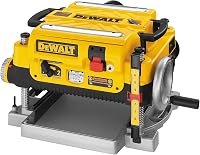
The DeWalt DW735X runs a 15 A motor turning the cutterhead at 10,000 rpm, so a dull set pulls more current and heats up faster on long boards.
Torn end grain on a crosscut test board is another quick check. Sharpen before the edge rolls over completely on wide or dense boards.
How to remove planer blades without damaging the cutterhead
Unplug the planer first, raise the cutterhead to its highest setting, and use the supplied wrench on each locking screw. Work one blade at a time so the set stays in order.
- Unplug the planer and wait for the cutterhead to stop spinning.
- Raise the cutterhead and open the chip guard as your manual shows.
- Loosen each locking screw a little at a time in a diagonal order, not one screw all the way.
- Slide the blade out with the spring bar in place, or lift the bar and blade together if the design uses one.
- Lay the blades flat and label them 1, 2 and 3 in their original positions.
Never pull a blade with pliers or pry it out with a screwdriver. A bent blade or a scarred cutterhead costs more than a sharpening job.
Store the set flat and edge up on a clean cloth, away from the bench edge.
Who should replace blades instead of sharpening them?
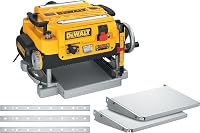
Anyone with chipped or bent blades should fit a fresh set first, then practice sharpening on the old one. A planer kit with spare knives makes the swap simple.
The DeWalt DW735X includes an extra set of knives, so a dull set can come out while the spare set goes in. Its three-knife cutterhead is designed for faster knife changes than older two-knife heads.
That spare set is the practical reason to buy the kit rather than the bare planer.
A deeply chipped blade loses too much width to fix and is better retired.
How do you sharpen thickness planer blades by hand?
Sharpen thickness planer blades by hand only for light touch-ups, using a flat stone or diamond plate and a guide that holds the factory bevel. It's a good way to keep a set going between full grinds, but it won't remove big chips.
Lay the blade with the bevel against a honing guide set to the same angle as the factory grind. Many planer knives carry a bevel near 40 to 45 degrees total, so set the guide to match rather than guessing.
Work the edge in long strokes on a medium stone, then a fine stone. Keep the stone flat and use light pressure so you don't round the edge.
Count the strokes and match each blade, so all three get the same amount of honing.
Wipe the blade dry and check the edge against a light. A uniform line with no glints means the edge is set.
A blade that's visibly nicked needs a grinder.
How do you grind planer blades on a bench grinder?
Grind thickness planer blades on a slow grinder with a steady rest, holding the blade at the factory bevel and taking light passes. A slow wheel with a flat rest removes steel predictably and keeps the edge from burning.
Set the rest so the blade face sits at the right angle without rocking. Lock it down and slide the blade steadily across the wheel face.
Check the edge after each light pass rather than grinding until it looks sharp.
A slow-speed grinder such as the BUCKTOOL 8-Inch model runs a 1750 rpm induction motor, which is gentle on planer steel compared with a fast grinder. Its 180 grit CBN wheel holds its shape over long sessions and suits ferrous metal edges.
Its wide face gives you room to slide a long blade across.
The slow motor still needs short passes: keep the blade moving and never press hard enough to blue the steel.
How do you hold a planer blade steady at the grinder?
Hold the blade flat against a locked tool rest, sliding it left and right while the wheel does the cutting. A rest that won't move is the difference between a straight bevel and a rounded edge.
The VEVOR Bench Grinder Tool Rest fits most 6 in and 8 in bench grinders and holds blades up to 2.5 in wide. Its flat miter slide locks the blade and lets it slide left and right.
The platform rotates from 0 to 90 degrees and adjusts up and down.
Mount it, set the angle, lock the blade and make light passes. A fixed, locked blade at a set angle keeps each knife in the set ground the same way.
Skip this rest if you already have a solid grinder rest with a good miter slot, since a wobbly rest rounds over the corners.
How do you set sharpened blades back in the cutterhead?
Put the blades back in their original order and set them to the same height, then tighten the locking screws in a diagonal pattern. Even height across the set is what makes the planer cut a flat surface.
Keep the labelled order from removal, so a set ground together stays matched in the head. Set each blade with the gauge or jig your planer uses.
A blade sitting a little high leaves a line; one sitting low leaves a ridge that the next blade has to cut.
Tighten the screws in small steps and in a diagonal order, checking each blade as you go. Snug all screws first, then torque them evenly.
A single over-tightened screw can pull one end of a blade down.
How do you test a freshly sharpened set?
Plane a scrap board and look at the surface and the edges, then check for tracks, snipe and tearout. A sharp set leaves an even face with no ridge lines and no fuzz on the end grain.
Start with a softwood scrap and then a short hardwood board. If the face comes out glassy and quiet, the set is good.
Run your hand over it after the planer stops; a smooth face with no washboard means even blades.
Tracks or lines running the length of the board usually mean one blade sits proud. Snipe at the ends points to board support or the cutterhead lock, not the edge.
Lock the carriage and support long boards before blaming the blades.
The DeWalt DW735X has an automatic carriage lock that reduces the movement behind snipe. Take a light cut first; heavy passes on a fresh edge put more load on the motor.
When should you call a sharpening service?
Send blades to a planer knife sharpening service when the set is chipped, bent or ground unevenly, or when you don't want to learn the grinder setup. A service grinds the set as a matched unit and checks the bevels.
Heavy nicks mean removing a lot of steel. A pro can tell you whether the blade still has enough width to keep.
For a hobbyist with one set and no grinder, a service is often the simpler path. Use the service when you want the set trued and matched once, then keep it going with light honing.
Which sharpening setup should you buy?
Buy the BUCKTOOL grinder and the VEVOR tool rest for home sharpening, and the DeWalt DW735X if you want spare knives so a dull set never stops the shop. That combination covers grinding and steady blade holding without a big outlay.
Skip the grinder if you only ever touch up edges with a stone. A honing guide and a flat stone are enough for light maintenance.
A planer knife sharpening service covers the rest.
Once the set is back in and cutting flat, compare benchtop planer picks for a smaller shop, or read our guide to do I need a jointer if I have a planer before adding another big tool. If you keep the DeWalt, store the spare set flat and edge up so the next swap is quick.
Frequently asked questions
How often should you sharpen thickness planer blades?
Hone or swap knives as soon as you see tearout or the planer starts to slow, then plan a real sharpening once the edge keeps rolling over. Light hobby use often gets months from a set, while heavy boards shorten that window.
Keep spare blades so you can keep planing while the set is being sharpened.
What angle should thickness planer blades be sharpened to?
Match the bevel angle of the blade you have, which is usually around 40 to 45 degrees total on the grinding face. Check the edge before you start, because grinding a different angle means removing extra steel to bring the blade back into line with the cutterhead.
Can you sharpen planer knives on a bench grinder?
Yes, with a low-speed grinder and a tool rest that holds the blade at a steady angle. A slow wheel keeps the steel from burning and stays more predictable than a fast grinder.
Heavy or chipped blades are safer with a planer blade sharpening service that grinds them as a set.
Why do freshly sharpened blades leave tracks or snipe?
Tracks usually mean one blade sits lower or sharper than the others, so the set must be ground evenly and set the same height. Snipe at the ends comes from boards tipping or from the planer not locking its cutterhead properly.
Test a scrap board first and check that the tables are flat.
Can you resharpen blades from a helical planer head?
No, helical cutterheads use small solid carbide inserts you replace rather than sharpen. Worn or chipped inserts are swapped for new ones and rotated to a fresh edge, and there's no grinding routine to follow.
Our guide to helical planer picks covers how those heads handle wear.