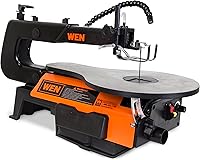
WEN 3922 Scroll Saw Review: Worth It? (November 2026)
The WEN 3922 scroll saw suits woodworkers who make detailed cuts and want easier lower-blade access. Its side panel opens for blade changes, while variable speed, a tilting table and a 16-inch throat handle common scroll saw work.
On this page (8 sections)
- WEN 3922 scroll saw review: who should buy it?
- What do the WEN 3922’s cutting limits mean?
- How should you set up the WEN 3922?
- How can you make blade changes and interior cuts easier?
- What common scroll saw mistakes should you avoid?
- How does the WEN 3922 compare with alternatives?
- What care and use habits help the saw stay ready?
- Is the WEN 3922 the right scroll saw for you?
The WEN 3922 scroll saw review takeaway is simple: choose it for detailed wood cuts when easier blade access matters. The side panel opens to reach the lower blade holder, and variable speed, a tilting table and dust-clearing features support common scroll saw work.
It cuts wood up to 2 inches thick and has a 16-inch throat depth. Those limits suit many small-shop patterns, ornaments and interior cuts, but they can rule it out if your work routinely needs thicker stock or a longer reach.
WEN 3922 scroll saw review: who should buy it?
The WEN 3922 is a strong fit for woodworkers who make intricate cuts and expect to change blades often. Its side panel flips open for access to the lower holder, and its thumb screw adapter allows tool-free blade changes.
WEN 3922 16-Inch Scroll Saw: Best for frequent blade changes

- 550–1600 strokes per minute
- 16-inch throat
- Table bevels up to 45 degrees
- Side panel opens for blade changes
The 3922 pairs variable speed with a side panel that opens for lower blade access. It includes an air pump, dust port, foot lock clamp and three blades.
Pros
- Side panel opens for easier access to the lower blade holder
- Accepts pinned, pinless and spiral blades
- Variable speed
- Includes an air pump and dust port
Cons
- Cuts wood up to 2 in thick
- Angled work requires setting the table bevel
The saw accepts pinned, pinless and spiral blades. It comes with three blades: one 15 TPI pinned blade, one 18 TPI pinned blade and one 18 TPI pinless blade.
Variable speed ranges from 550 to 1600 strokes per minute. The 16-by-10-inch table bevels up to 45 degrees for angled work.
Choose another saw if you regularly cut wood thicker than 2 inches, need a built-in work light, or rely on two-direction blade setup. The 3922 does not list a work light, and its standard throat is 16 inches.
What do the WEN 3922’s cutting limits mean?
The WEN 3922 has a 16-inch throat and a 2-inch maximum wood thickness. Use both numbers to screen your projects before buying because they describe separate limits.
Throat depth measures the space from the blade to the rear frame. More throat room lets a larger workpiece extend behind the blade, but you still need enough open bench space to turn and guide the wood through a curve.
The thickness limit applies to wood. For angled cuts, the table bevels up to 45 degrees, so plan the angle and support the workpiece before cutting.
Scroll saws suit detailed curves and interior cuts. If you are deciding between saw types, the guide to scroll saws versus jigsaws explains which tool better matches different curve-cutting jobs.
How should you set up the WEN 3922?
Set the 3922 on a firm, level bench with clear space around the table. Its cast iron base weighs 24.9 pounds, and a stable surface gives you room to guide the workpiece and reach the controls.
Before the first cut, place the saw where the cord can reach an outlet without crossing the cutting area or creating a trip hazard. Leave space at the sides and front to turn larger pieces, and make sure your planned dust hose can reach the 1-1/2-inch port.
Choose a blade that fits the cut and material, then install it according to the saw’s instructions. Check that it is seated and tensioned correctly before switching on the machine.
Direct the adjustable air pump toward the cut line so loose sawdust moves out of your view. If you use the dust port, check that the hose and your collection setup fit together before starting work.
How can you make blade changes and interior cuts easier?
The 3922’s opening side panel makes lower blade access easier when you install a blade or thread it through an interior opening. That matters when a pattern has enclosed cutouts that require removing and reinstalling the blade.
For an interior cut, drill a starter hole inside the waste area of the pattern. Remove the blade as directed, feed it through the hole, secure it again and check its tension before cutting.
Use the included pinned or pinless blade that suits your setup, or choose a compatible spiral blade when the cut calls for it. Don’t assume every blade works with every holder; check compatibility and follow the saw’s instructions when changing blade types.
The side panel helps you reach the lower holder, but careful installation still matters. A blade that is not seated or tensioned properly can wander or break, so pause to check it before resuming a cut.
For a detailed walkthrough, follow how to change a scroll saw blade. The WEN 3922 versus 3923 comparison covers the closest alternative if you want the same general cutting range with a flexible light.
What common scroll saw mistakes should you avoid?
The most common avoidable mistakes are rushing a curve, choosing a blade without considering the cut, and starting before the workpiece is secure. A scroll saw gives you control over small turns, but forcing the wood can make it harder to follow a pattern cleanly.
Mark the cut line clearly and guide the workpiece at a steady pace. Let the blade do the work, and make small turns instead of twisting or pushing sharply into a tight curve.
Use the foot lock clamp to help secure the workpiece. Keep the line visible by aiming the air pump at the cut, and stop to clear the area if sawdust blocks your view.
Avoid treating throat depth as a guide to how thick a board the saw can cut. The throat describes reach; the 2-inch wood thickness limit describes the maximum stated material depth.
How does the WEN 3922 compare with alternatives?
The 3922 is the clearest choice if easy lower blade access is your main priority. The 3921 adds a two-direction blade setup, while the 3923 adds a flexible work light to a similar easy-access design.
| Model | What sets it apart | Consider it when |
|---|---|---|
| WEN 3922 | Opening side panel and 550–1600 strokes per minute | Frequent blade changes matter |
| WEN 3921 | Blade can be set in standard or 90-degree direction | You want two-direction cutting |
| WEN 3923 | Opening side panel and flexible work light | You want easy access and a light |
| SKIL SS9503 | Keyless blade changes, LED light and integrated dust removal | Those built-in features suit your setup |
The 3921 also has onboard blade and holder storage. Its 16-inch throat applies in the standard position, so consider how its two-direction setup fits your actual work.
The SKIL is a sensible alternative if you prefer keyless blade changes and integrated lighting and dust removal. The best scroll saws for beginners guide offers more choices if none of these feature combinations suits your projects.
If you are planning a compact workshop around benchtop machines, see our overview of benchtop woodworking tools for help choosing equipment around the work you plan to do.
What care and use habits help the saw stay ready?
Keep the table and work area clear of loose sawdust and scraps so you can see and guide each cut. Aim the air pump toward the cut line, and use the dust port with a suitable collection setup where practical.
Check the blade before each project for correct seating and tension. Replace a damaged or unsuitable blade rather than trying to force it through a cut.
After use, clear dust from the table and around the blade holder. Store spare blades where they will stay organized and protected, then check that the side panel and access area are clear before the next setup.
Is the WEN 3922 the right scroll saw for you?
Choose the WEN 3922 if frequent blade changes, variable speed and a 16-inch throat fit your wood projects. It is especially appealing for detailed patterns and interior cuts where reaching the lower blade holder is part of regular setup.
Choose the 3923 if you want a flexible work light alongside easy blade access, or consider the 3921 if its two-direction blade setup better suits your work. For the final model comparison, read WEN 3922 versus 3923 and pick the features you will use most.
Frequently asked questions
What makes the WEN 3922 different from the WEN 3923?
The 3922 and 3923 share a 16-inch throat, variable speed from 550 to 1600 strokes per minute, a table that bevels up to 45 degrees and an access panel for blade changes. The 3923 adds a flexible work light, so choose it if lighting at the saw is a priority.
What blades can the WEN 3922 use?
The 3922 accepts pinned, pinless and spiral blades. It includes one 15 TPI pinned blade, one 18 TPI pinned blade and one 18 TPI pinless blade.
Match a replacement blade to the material and cut, and follow the saw’s instructions when installing it.
How thick can the WEN 3922 cut?
The 3922 cuts wood up to 2 inches thick and has a 16-inch throat depth. Thickness is the wood’s depth; throat depth is the distance from blade to frame and limits how far a workpiece can extend from the blade.
Does the WEN 3922 have dust control?
The 3922 includes an adjustable air pump to move sawdust away from the cut area and a 1-1/2-inch dust port. These can help keep the line visible and connect to a suitable shop setup, but you should still plan for dust collection and cleanup.